Row Crop tractorsSpec sheet
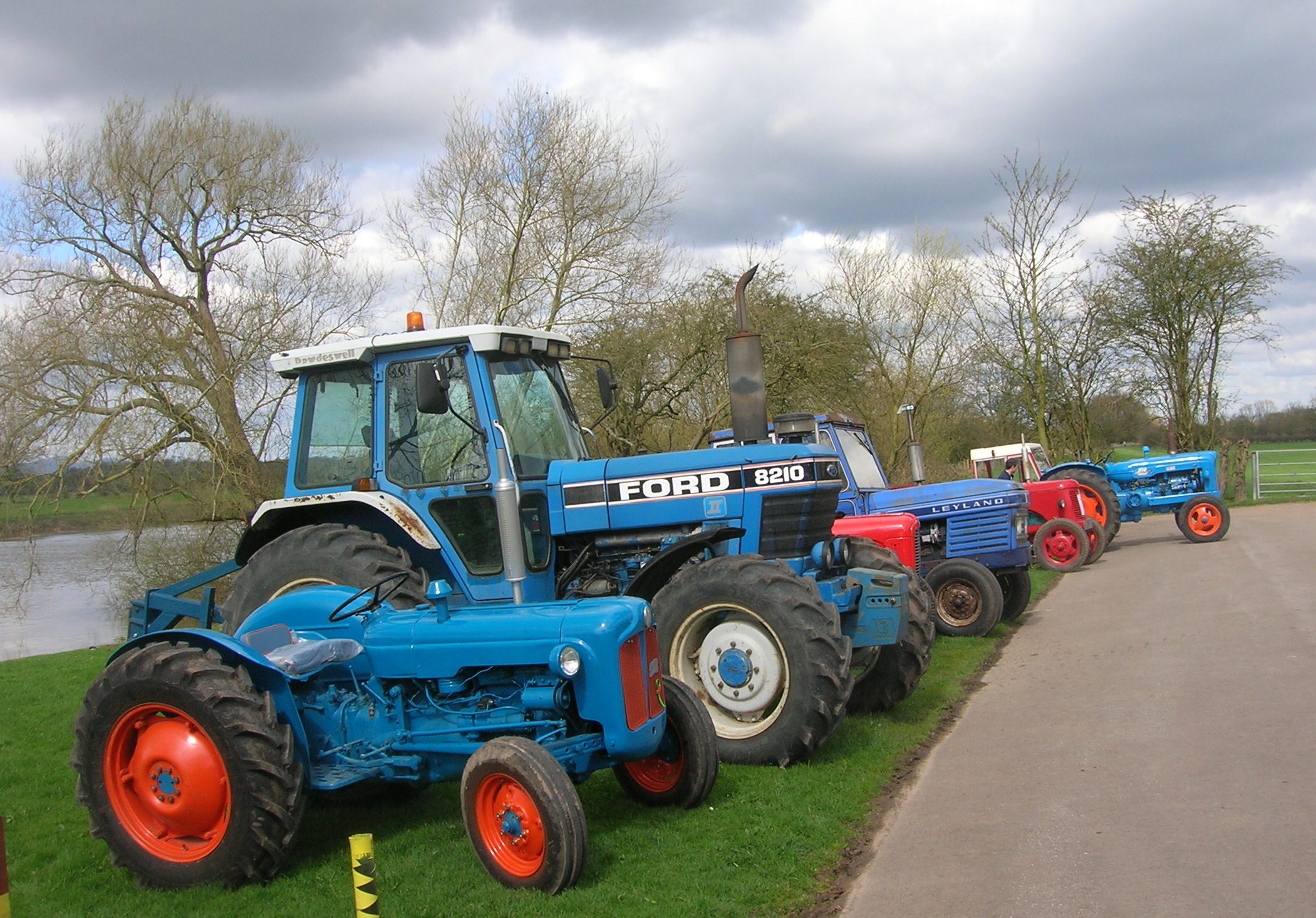
Ford 8210
The Ford 8210 is a row crop tractor made from 1982 to 1991. It has a 2WD setup with power steering, making it easy to control in the fields. The tractor is powered by a 6-cylinder diesel engine from Ford, which produces 100.2 hp at 2300 rpm. This engine power is below average compared to other tractors. The 8210 has a two-speed power shift transmission with 16 forward and 8 reverse gears, giving farmers plenty of options for different tasks. This tractor comes with a three-point hitch at the rear, which can lift up to 4430 lb. It has an independent PTO with two speed options: 540 rpm and 1000 rpm. The hydraulic system is open center type, with a pump flow of 9.1 gpm and pressure of 2610 psi. The 8210 weighs 9851 lb and has a cab for operator comfort. It runs on ag tires, with 14.9-24 in the front and 18.4-34 in the rear. The tractor measures 176.6 inches long and 114 inches tall, making it a good size for many farm jobs.
ManufacturerFordPower100.2 hp(74.7 kW)Class100–150 HP tractors →Engine6-cylinderTransmissionTwo-speed power shift

Key specifications
- Category
- Row Crop
- Engine power
- 100hp
- Operating weight
- 9,851 lb
- Transmission
- Two-speed power shift
Category comparison
8210 compared with its category
vs. Row Crop medianDistribution
Engine Power (hp)
All recorded Row Crop tractors
100.2 hp · 26th
This model
12
Median 138 hp
283
This modelRow Crop tractorsMediann = 1,206
The 8210 ranks at the 26th percentile for engine power among recorded row crop tractors.
Overview
About the Ford 8210
The Ford 8210 is a row crop tractor made from 1982 to 1991. It has a 2WD setup with power steering, making it easy to control in the fields. The tractor is powered by a 6-cylinder diesel engine from Ford, which produces 100.2 hp at 2300 rpm. This engine power is below average compared to other tractors. The 8210 has a two-speed power shift transmission with 16 forward and 8 reverse gears, giving farmers plenty of options for different tasks. This tractor comes with a three-point hitch at the rear, which can lift up to 4430 lb. It has an independent PTO with two speed options: 540 rpm and 1000 rpm. The hydraulic system is open center type, with a pump flow of 9.1 gpm and pressure of 2610 psi. The 8210 weighs 9851 lb and has a cab for operator comfort. It runs on ag tires, with 14.9-24 in the front and 18.4-34 in the rear. The tractor measures 176.6 inches long and 114 inches tall, making it a good size for many farm jobs.
Full specifications
Recorded specifications
General
| Manufacturer | Ford |
|---|---|
| Model | 8210 |
| Category | Row Crop tractor |
| Type | 4x2 2WD |
| Years built | 1982–1991 |
| Operating weight | 9,851lb(4,468 kg) |
Engine
| Make | Ford |
|---|---|
| Power | 100.2hp(74.72 kW) |
| Cylinders | 6 |
| Displacement | 401ci(6.57 L) |
| Bore | 4.41in(112 mm) |
| Stroke | 4.41in(112 mm) |
Transmission
| Type | Two-speed power shift |
|---|---|
| Forward gears | 16 |
| Reverse gears | 8 |
Chassis & drive
| Chassis | 4x2 2WD |
|---|---|
| Drive | 2WD |
| Steering | Power |
| Brakes | Multiple wet disc operated by two foot pedals which can be locked together |
| Cab | Cab |
Hydraulics
| Type | Open center |
|---|---|
| Pump flow | 9.1gpm(34.45 L/min) |
| Pressure | 2,610psi(18,000 kPa) |
Power take-off
| Rear PTO | Independent |
|---|---|
| PTO speed | 540rpm |
Dimensions
| Length | 176.6in(4,486 mm) |
|---|---|
| Height | 114in(2,896 mm) |
| Operating weight | 9,851lb(4,468 kg) |
Tires
| Front | 14.9-24Convert |
|---|---|
| Rear | 18.4-34Convert |
Capacities
| Cooling system | 5.63gal(21.31 L) |
|---|
Closest alternatives
8210 compared with the nearest models by horsepower
The closest row crop models to the Ford 8210 by rated horsepower are the Massey Ferguson 6270 and the New Holland 7740. The Massey Ferguson 6270 matches it on rated power and weighs 250 lb less. It entered production in 1997, 15 years after the 8210. The New Holland 7740 matches it on rated power and weighs 1,170 lb less, carrying 87 lb per horsepower against 98 lb. It entered production in 1996, 14 years after the 8210. Of the 3 models, the 8210 has the highest weight per horsepower at 98 lb per hp.
| Spec | Ford 8210 | Massey Ferguson 6270 | New Holland 7740 |
|---|---|---|---|
| Engine power | 100.2 hp74.7 kW | 100.2 hp74.7 kW | 100.3 hp74.8 kW |
| Operating weight | 9,851 lb4,468 kg | 9,600 lb4,354 kg | 8,680 lb3,937 kg |
| Weight per hp | 98 lb/hp60 kg/kW | 96 lb/hp58 kg/kW | 87 lb/hp53 kg/kW |
| Displacement | 401 ci6.57 L | 365.2 ci5.98 L | 304 ci4.98 L |
| Cylinders | 6 | 6 | 4 |
| Transmission | Two-speed power shift | Four-speed power shift | Constant mesh |
| Drive | 2WD | 2WD | 2WD |
| Years built | 1982-1991 | 1997-2003 | 1996-1997 |
Calculators
Calculators for the 8210
PTO power
About 83 to 90 PTO hp
Estimated from the 100.2 hp engine rating. The calculator also estimates drawbar power by surface.
Implement sizing
Implements a 100.2 hp tractor can run
Maximum size is about a 12 ft rotary cutter or a 10 ft tiller. The calculator also sizes discs, plows and balers.
Ballast
114 lb per PTO hp as listed
Heavy draft work calls for 130 to 150 lb/hp. The calculator gives the ballast to add.
Units
100.2 hp is 74.7 kW
The converter gives kW and metric PS values, as used on European spec sheets.
Tires
Convert the 18.4-34 tire size
The calculator gives diameter, rolling circumference and the metric or inch equivalent.
Category medians
8210 vs. Row Crop median
Ford 8210 compared with other Row Crop tractors
| Spec | This model | Row Crop median | Difference | Percentile |
|---|---|---|---|---|
| Engine Power | 100 hp | 138 hp | -27% | 26th |
| Engine Displacement | 401 ci | 391 ci | +3% | 51st |
| Cylinders | 6 | 6 | at median | 50th |
| Forward Gears | 16 | 16 | at median | 50th |
| Operating Weight | 9,851 lb | 12,307 lb | -20% | 31st |
| Length | 177 in | 180 in | -2% | 45th |
| Height | 114 in | 114 in | 0% | 51st |
| 3-Point Hitch Capacity | 4,430 lb | 11,023 lb | -60% | 7th |
Medians and percentiles are calculated from the row crop tractors in the database that have a recorded value for each specification (sample size 279–1,417 models).
Same manufacturer
Other Ford models


Other manufacturers
Models with similar horsepower


Gallery
Ford 8210 photos
FAQ
Frequently asked questions
When was the Ford 8210 made?
The Ford 8210 was manufactured from 1982 to 1991.
What is the operating weight of the Ford 8210?
The Ford 8210 has an operating weight of about 9,851 lb.
Which transmission does the Ford 8210 use?
The Ford 8210 is equipped with a Two-speed power shift transmission with 16 forward gears.
What type of hydraulic system does the Ford 8210 use?
Hydraulics on the Ford 8210 are Open center, delivering 9.1 gpm of pump flow.
What size tires does the Ford 8210 use?
The Ford 8210 is fitted with 14.9-24 front tires and 18.4-34 rear tires from the factory.
What hitch category is the Ford 8210?
The Ford 8210 uses a Category Category 2 hitch with a lift capacity of 4,430 lb.
What is the engine power output of the Ford 8210?
Rated engine output for the Ford 8210 is 100.2 hp, delivered by a 6-cylinder engine. The engine displaces 401 ci.
How do I maintain a Ford 8210?
Routine service for the Ford 8210 covers engine oil and filter changes, hydraulic and coolant level checks, air filter cleaning, and scheduled inspections. Refer to the manufacturer's maintenance schedule for exact intervals.