Utility
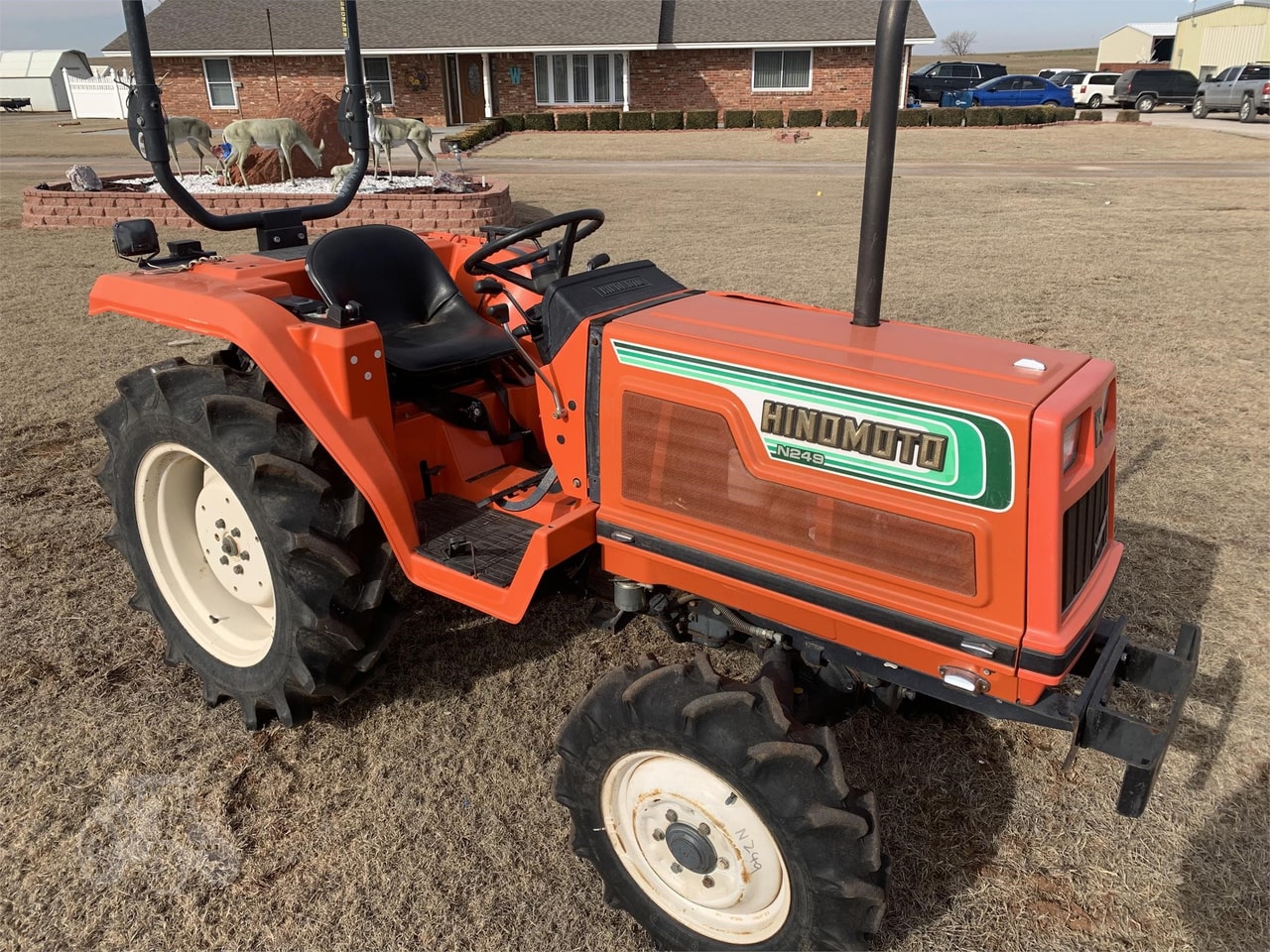
Hinomoto N249
The Hinomoto N249 is a tough utility tractor built for hard work. It has a powerful 4-wheel drive system that helps it handle rough terrain and tough jobs. The tractor uses a shuttle transmission, which makes it easy to switch between forward and backward. It has 16 gears for going forward and 16 for going backward, giving the driver lots of choices for different tasks. Under the hood, the N249 has a Toyosha diesel engine with three cylinders. This engine is cooled by liquid, which helps it run smoothly in hot weather. The tractor starts up easily with an electric starter. It needs new oil every 200 hours of use to keep running well. The cooling system holds 5.9 quarts of coolant to keep the engine from getting too hot. With its strong build and useful features, the Hinomoto N249 is a great choice for farmers who need a reliable tractor for many different jobs.
ManufacturerHinomotoEngine3-cylTransShuttle
Quick specs
- Category
- Utility
- Transmission
- Shuttle
Overview
About the Hinomoto N249
The Hinomoto N249 is a tough utility tractor built for hard work. It has a powerful 4-wheel drive system that helps it handle rough terrain and tough jobs. The tractor uses a shuttle transmission, which makes it easy to switch between forward and backward. It has 16 gears for going forward and 16 for going backward, giving the driver lots of choices for different tasks. Under the hood, the N249 has a Toyosha diesel engine with three cylinders. This engine is cooled by liquid, which helps it run smoothly in hot weather. The tractor starts up easily with an electric starter. It needs new oil every 200 hours of use to keep running well. The cooling system holds 5.9 quarts of coolant to keep the engine from getting too hot. With its strong build and useful features, the Hinomoto N249 is a great choice for farmers who need a reliable tractor for many different jobs.
Full specifications
Every recorded spec
General
| Manufacturer | Hinomoto |
|---|---|
| Model | N249 |
| Category | Utility tractor |
| Type | 4x4 MFWD 4WD |
Engine
| Model | Toyosha |
|---|---|
| Cylinders | 3 |
Transmission
| Type | Shuttle |
|---|---|
| Forward gears | 16 |
| Reverse gears | 16 |
Chassis & drive
| Chassis | 4x4 MFWD 4WD |
|---|---|
| Drive | 4WD |
| Steering | Power |
Capacities
| Cooling system | 1.48gal |
|---|
Head to head
N249 vs. Utility median
How the Hinomoto N249 compares to other Utility tractors
| Spec | This model | Utility median | Difference | Percentile |
|---|---|---|---|---|
| Cylinders | 3 | 4 | -25% | 23rd |
| Forward Gears | 16 | 12 | +33% | 73rd |
Medians and percentiles are computed from the utility tractors in our database with a recorded value for each spec (sample sizes 4,941–5,720 models).
Compare to tractors with similar specs
Commonly compared Hinomoto tractors
| Tractor | Engine Power | Operating Weight | Years | Compare |
|---|---|---|---|---|
| Hinomoto 9523 | 23 hp | 1,825 lb | 1978–1983 | Compare → |
| Hinomoto C142 | 17 hp | 1,263 lb | — | Compare → |
| Hinomoto C144 | 17 hp | 1,473 lb | — | Compare → |
| Hinomoto CB-4S Combac | — | — | — | Compare → |
| Hinomoto E144 | — | — | — | Compare → |
Commonly compared tractors with similar horsepower from other brands
| Tractor | Engine Power | Operating Weight | Years | Compare |
|---|---|---|---|---|
| Advance-Rumely 6A | — | 6,370 lb | — | Compare → |
| Advance-Rumely DoAll | — | 3,702 lb | — | Compare → |
| Advance-Rumely OilPull B 25/45 | — | 25,000 lb | — | Compare → |
| Advance-Rumely OilPull E 30/60 | — | 26,300 lb | — | Compare → |
| Advance-Rumely OilPull F 15/30 | — | 16,500 lb | — | Compare → |
Explore
Hinomoto siblings


Explore
Similar-spec models

Gallery
Hinomoto N249 photos


FAQ
Common questions
How many cylinders does the Hinomoto N249 have?
The Hinomoto N249 runs a 3-cylinder engine.
What type of transmission does the Hinomoto N249 have?
The Hinomoto N249 uses a Shuttle transmission offering 16 forward gears.
What routine service does the Hinomoto N249 need?
Regular maintenance for the Hinomoto N249 includes checking and changing engine oil, hydraulic fluid, and filters, plus routine inspections as recommended in the owner's manual. Always follow the manufacturer's maintenance schedule for specific intervals and procedures.