UtilityPerformance profile
Iseki SX75
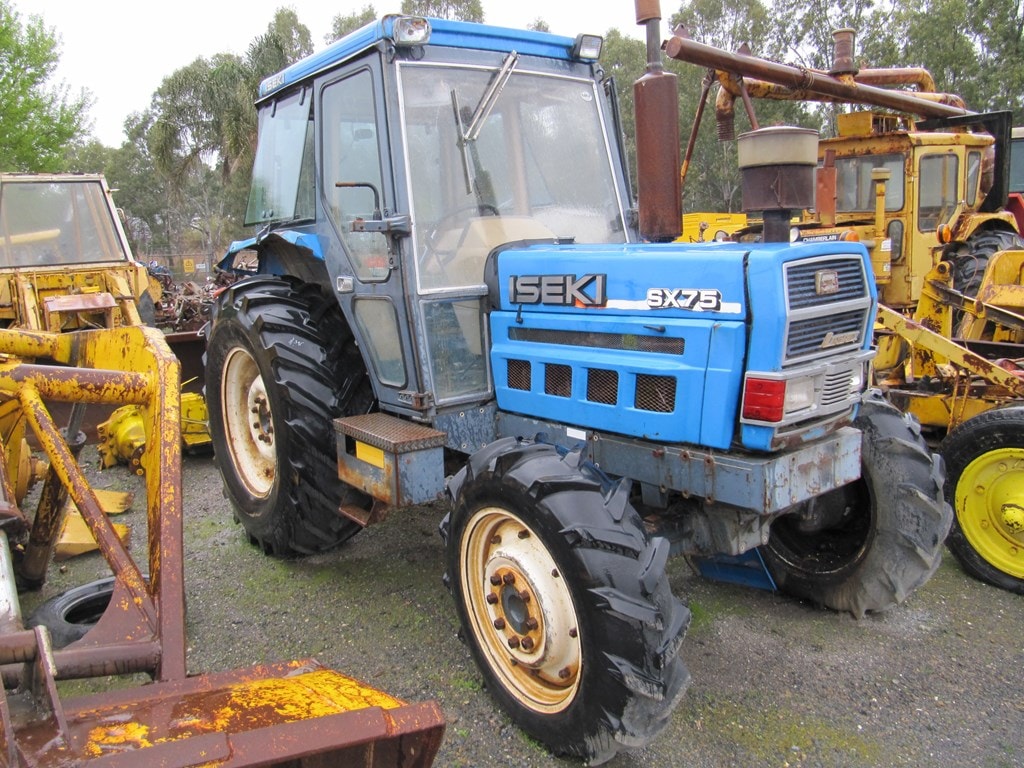
The Iseki SX75 is a utility tractor made from 1985 to 1990. It has a 2WD chassis and is powered by a 4-cylinder Isuzu diesel engine. This engine has 70 horsepower, which is above average for tractors. It can cool itself with liquid and doesn't need extra air to run well. The SX75 has a strong hitch that can lift up to 6,836 pounds, which is very high compared to other tractors. It weighs 6,856 pounds, making it heavier than many similar tractors. The tractor has a 12-speed forward and 4-speed reverse transmission, giving drivers lots of options. It also has two PTO speeds: 540 rpm and 1000 rpm. For safety, it comes with a four-post ROPS (roll-over protection structure). Some models might have air conditioning for comfort in hot weather.
ManufacturerIsekiPower70 hpEngine4-cylTransSyncromesh with dry disc clutch
Quick specs
- Category
- Utility
- Engine Power Output
- 70hp
- Operating Weight
- 6,856 lb
- Transmission
- Syncromesh with dry disc clutch
At a glance
How the SX75 compares
vs. Utility medianDistribution
Engine Power (hp)
Across all Utility tractors
70 hp · 63rd
This model
9
Median 55 hp
177
This modelUtility tractorsMediann = 5,383
The SX75 ranks at the 63rd percentile for engine power among recorded utility tractors.
Overview
About the Iseki SX75
The Iseki SX75 is a utility tractor made from 1985 to 1990. It has a 2WD chassis and is powered by a 4-cylinder Isuzu diesel engine. This engine has 70 horsepower, which is above average for tractors. It can cool itself with liquid and doesn't need extra air to run well. The SX75 has a strong hitch that can lift up to 6,836 pounds, which is very high compared to other tractors. It weighs 6,856 pounds, making it heavier than many similar tractors. The tractor has a 12-speed forward and 4-speed reverse transmission, giving drivers lots of options. It also has two PTO speeds: 540 rpm and 1000 rpm. For safety, it comes with a four-post ROPS (roll-over protection structure). Some models might have air conditioning for comfort in hot weather.
Full specifications
Every recorded spec
General
| Manufacturer | Iseki |
|---|---|
| Model | SX75 |
| Category | Utility tractor |
| Type | 4x2 2WD |
| Years built | 1985–1990 |
| Operating weight | 6,856lb |
Engine
| Make | Isuzu |
|---|---|
| Model | 4BD1 |
| Power | 70hp |
| Cylinders | 4 |
| Displacement | 235.3ci |
| Bore | 4.02in |
| Stroke | 4.65in |
Transmission
| Type | Syncromesh with dry disc clutch |
|---|---|
| Forward gears | 12 |
| Reverse gears | 4 |
Chassis & drive
| Chassis | 4x2 2WD |
|---|---|
| Drive | 2WD |
| Steering | Hydraulic power |
| Brakes | Wet disc |
| Cab | Four-post ROPS |
Power take-off
| Rear PTO | Independent |
|---|---|
| PTO speed | 540rpm |
Dimensions
| Length | 152.8in |
|---|---|
| Height | 103.9in |
| Operating weight | 6,856lb |
Head to head
SX75 vs. Utility median
How the Iseki SX75 compares to other Utility tractors
| Spec | This model | Utility median | Difference | Percentile |
|---|---|---|---|---|
| Engine Power | 70 hp | 55 hp | +27% | 63rd |
| Engine Displacement | 235 ci | 183 ci | +29% | 63rd |
| Cylinders | 4 | 4 | at median | 50th |
| Forward Gears | 12 | 12 | at median | 50th |
| Operating Weight | 6,856 lb | 5,303 lb | +29% | 65th |
| Length | 153 in | 137 in | +12% | 69th |
| Height | 104 in | 94.1 in | +10% | 74th |
| 3-Point Hitch Capacity | 6,836 lb | 3,197 lb | +114% | 84th |
Medians and percentiles are computed from the utility tractors in our database with a recorded value for each spec (sample sizes 1,083–5,720 models).
Compare to tractors with similar specs
Commonly compared Iseki tractors
| Tractor | Engine Power | Operating Weight | Years | Compare |
|---|---|---|---|---|
| Iseki T7010 | 70 hp | — | — | Compare → |
| Iseki TJ75 | 74 hp | 5,600 lb | — | Compare → |
| Iseki T6500 | 64.1 hp | — | — | Compare → |
| Iseki TJ65 | 64.1 hp | 5,600 lb | — | Compare → |
| Iseki TR63 | 62.1 hp | 5,313 lb | — | Compare → |
Commonly compared tractors with similar horsepower from other brands
| Tractor | Engine Power | Operating Weight | Years | Compare |
|---|---|---|---|---|
| Antonio Carraro SRX 8400 | 70 hp | 4,486 lb | — | Compare → |
| Barreiros 7000 | 70 hp | 5,335 lb | — | Compare → |
| AGCO GT65 | 71 hp | 5,335 lb | — | Compare → |
| Agco GT65A | 71 hp | 5,864.3 lb | — | Compare → |
| Antonio Carraro SX 7800S | 71 hp | 4,773 lb | — | Compare → |
Explore
Iseki siblings


Explore
Similar-spec models
Gallery
Iseki SX75 photos


FAQ
Common questions
When was the Iseki SX75 in production?
Iseki SX75 production started in 1985 and ended in 1990.
How much does the Iseki SX75 weigh?
The Iseki SX75 weighs about 6,856 lb in operating condition.
What transmission is in the Iseki SX75?
Transmission on the Iseki SX75 is Syncromesh with dry disc clutch, with 12 forward speeds.
What hitch category is the Iseki SX75?
The Iseki SX75 uses a Category Category 3 hitch with a lift capacity of 6,836 lb.
How much horsepower does the Iseki SX75 have?
The Iseki SX75 produces 70 hp from its 4-cylinder engine. Engine displacement is 235.3 ci.
What maintenance does the Iseki SX75 require?
Like any tractor, the Iseki SX75 needs periodic engine oil and filter changes, hydraulic fluid checks, and regular greasing and inspection. The owner's manual lists the manufacturer's recommended service intervals.