Tractor specifications
Waterloo Boy R
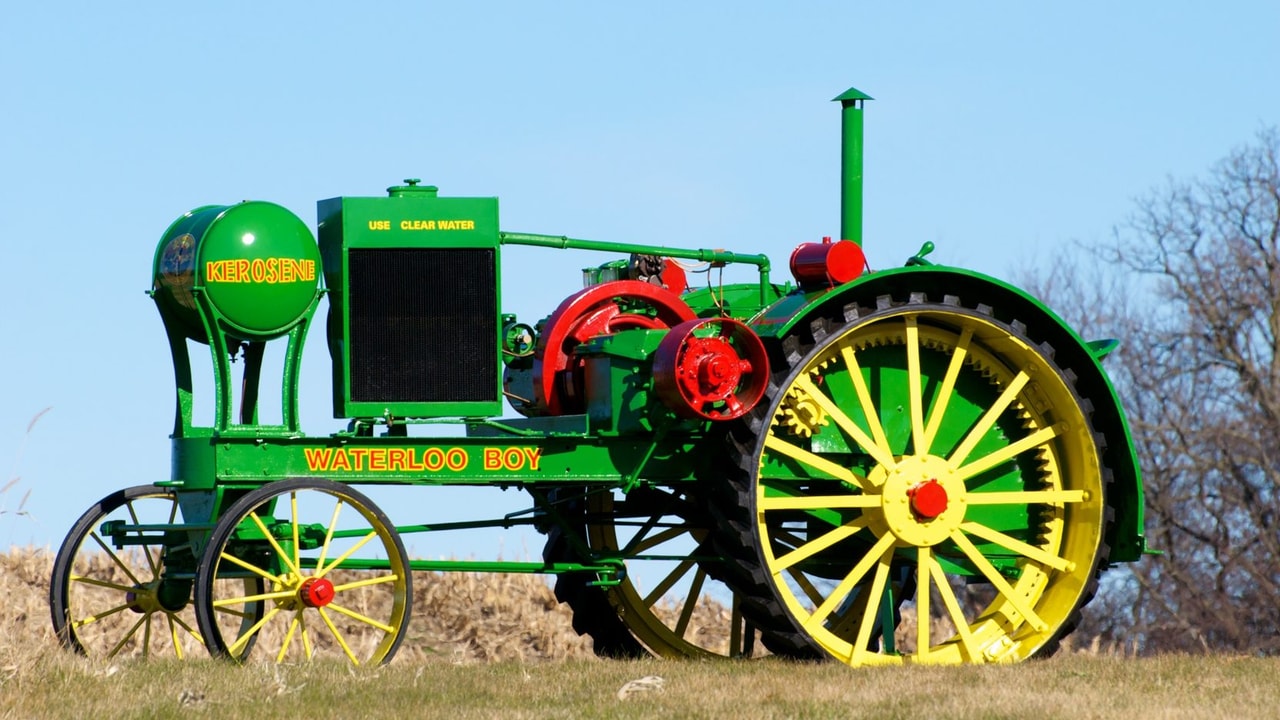
The Waterloo Boy Model R is a classic tractor from the early days of farm mechanization. It's powered by a 2-cylinder kerosene engine made by the Waterloo Gasoline Engine Company. This engine has a displacement of 465 cubic inches, with a 6.5-inch bore and 7-inch stroke. It runs at a steady 750 RPM, which was typical for tractors of its time. This tractor is built tough, with steel wheels instead of rubber tires. It's a big machine, measuring 143 inches long, 72 inches wide, and 63 inches tall. The Waterloo Boy R weighs in at 6,200 pounds, making it a hefty workhorse for the fields. It has a simple design with manual steering and a basic transmission with just one forward and one reverse gear. Starting this tractor takes some muscle, as it uses a hand-crank system. The cooling system holds 34 quarts of coolant to keep the engine running smoothly during long work days.
ManufacturerWaterloo BoyEngine2-cylTransUnsynchronized gear
Quick specs
- Operating Weight
- 6,200 lb
- Transmission
- Unsynchronized gear
Overview
About the Waterloo Boy R
The Waterloo Boy Model R is a classic tractor from the early days of farm mechanization. It's powered by a 2-cylinder kerosene engine made by the Waterloo Gasoline Engine Company. This engine has a displacement of 465 cubic inches, with a 6.5-inch bore and 7-inch stroke. It runs at a steady 750 RPM, which was typical for tractors of its time. This tractor is built tough, with steel wheels instead of rubber tires. It's a big machine, measuring 143 inches long, 72 inches wide, and 63 inches tall. The Waterloo Boy R weighs in at 6,200 pounds, making it a hefty workhorse for the fields. It has a simple design with manual steering and a basic transmission with just one forward and one reverse gear. Starting this tractor takes some muscle, as it uses a hand-crank system. The cooling system holds 34 quarts of coolant to keep the engine running smoothly during long work days.
Full specifications
Every recorded spec
General
| Manufacturer | Waterloo Boy |
|---|---|
| Model | R |
| Operating weight | 6,200lb |
Engine
| Make | Waterloo Gasoline Engine Company |
|---|---|
| Cylinders | 2 |
| Displacement | 465ci |
| Bore | 6.5in |
| Stroke | 7in |
Transmission
| Type | Unsynchronized gear |
|---|---|
| Forward gears | 1 |
| Reverse gears | 1 |
Chassis & drive
| Steering | Manual |
|---|
Dimensions
| Length | 143in |
|---|---|
| Width | 72in |
| Height | 63in |
| Operating weight | 6,200lb |
Capacities
| Cooling system | 8.5gal |
|---|
Head to head
R vs. category median
Compare to tractors with similar specs
Commonly compared Waterloo Boy tractors
| Tractor | Engine Power | Operating Weight | Years | Compare |
|---|---|---|---|---|
| Waterloo Boy C | — | 3,235 lb | — | Compare → |
| Waterloo Boy L | — | 3,000 lb | — | Compare → |
| Waterloo Boy LA | — | 3,000 lb | — | Compare → |
| Waterloo Boy N | 12 hp | 6,183 lb | — | Compare → |
| Waterloo Boy P | — | — | — | Compare → |
Commonly compared tractors with similar horsepower from other brands
| Tractor | Engine Power | Operating Weight | Years | Compare |
|---|---|---|---|---|
| Advance-Rumely 6A | — | 6,370 lb | — | Compare → |
| Advance-Rumely DoAll | — | 3,702 lb | — | Compare → |
| Advance-Rumely OilPull B 25/45 | — | 25,000 lb | — | Compare → |
| Advance-Rumely OilPull E 30/60 | — | 26,300 lb | — | Compare → |
| Advance-Rumely OilPull F 15/30 | — | 16,500 lb | — | Compare → |
Explore
Waterloo Boy siblings


Explore
Similar-spec models

Gallery
Waterloo Boy R photos


FAQ
Common questions
How many cylinders does the Waterloo Boy R have?
The Waterloo Boy R runs a 2-cylinder engine with a displacement of 465 ci.
What type of transmission does the Waterloo Boy R have?
The Waterloo Boy R uses an Unsynchronized gear transmission offering 1 forward gears.
What is the working weight of the Waterloo Boy R?
The operating weight of the Waterloo Boy R is approximately 6,200 lb.
What routine service does the Waterloo Boy R need?
Regular maintenance for the Waterloo Boy R includes checking and changing engine oil, hydraulic fluid, and filters, plus routine inspections as recommended in the owner's manual. Always follow the manufacturer's maintenance schedule for specific intervals and procedures.