Utility
Allis Chalmers 25-40 E
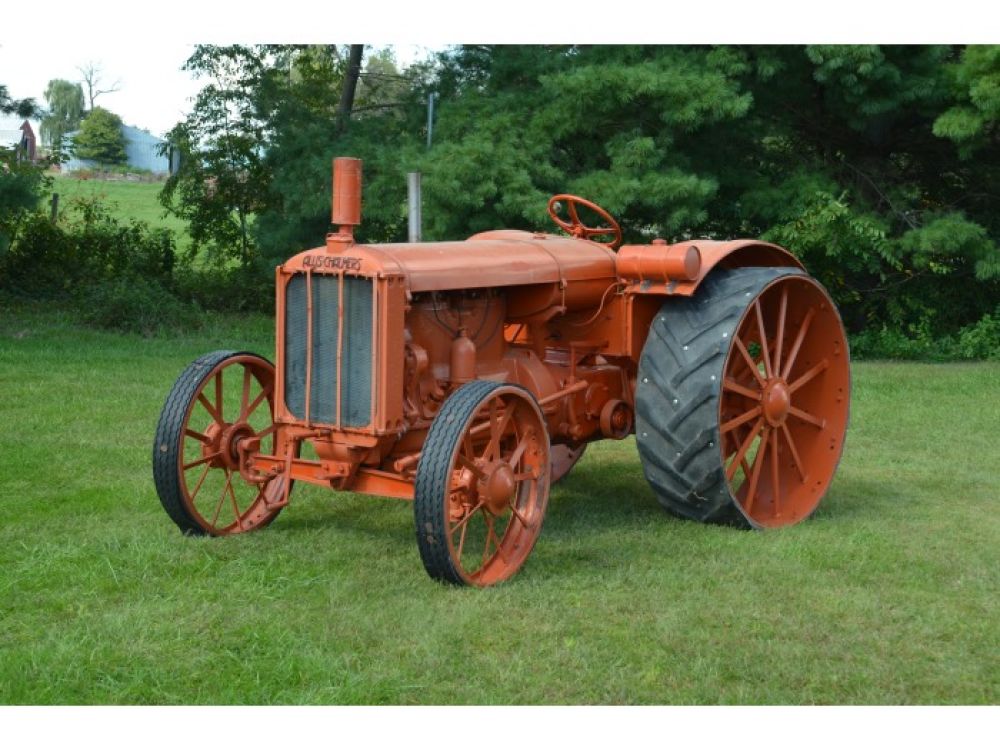
The Allis Chalmers 25-40 E is a utility tractor built for standard tread work. It has a 2WD drive system with manual steering and a gear transmission. The tractor offers 2 forward gears and 1 reverse gear, making it simple to operate. Under the hood, this tractor boasts a powerful 4-cylinder gasoline engine made by Allis Chalmers. With a very high engine displacement of 563 cubic inches, it packs a punch for its size. The engine runs at a low 1000 RPM, which helps save fuel. It has a large coolant capacity of 40 quarts to keep the engine running smoothly. The tractor weighs 7000 pounds, which is above average for its class, giving it good stability during work. The 25-40 E stands out with its steel wheels, both in front and rear. It measures 152 inches long, 76 inches wide, and 65 inches tall. The front tires are 36 inches in diameter and 6 inches wide, while the rear tires are larger at 50 inches in diameter and 12 inches wide. This setup provides good traction and stability for various farming tasks.
ManufacturerAllis ChalmersEngine4-cylTransGear
Quick specs
- Category
- Utility
- Operating Weight
- 7,000 lb
- Transmission
- Gear
Overview
About the Allis Chalmers 25-40 E
The Allis Chalmers 25-40 E is a utility tractor built for standard tread work. It has a 2WD drive system with manual steering and a gear transmission. The tractor offers 2 forward gears and 1 reverse gear, making it simple to operate. Under the hood, this tractor boasts a powerful 4-cylinder gasoline engine made by Allis Chalmers. With a very high engine displacement of 563 cubic inches, it packs a punch for its size. The engine runs at a low 1000 RPM, which helps save fuel. It has a large coolant capacity of 40 quarts to keep the engine running smoothly. The tractor weighs 7000 pounds, which is above average for its class, giving it good stability during work. The 25-40 E stands out with its steel wheels, both in front and rear. It measures 152 inches long, 76 inches wide, and 65 inches tall. The front tires are 36 inches in diameter and 6 inches wide, while the rear tires are larger at 50 inches in diameter and 12 inches wide. This setup provides good traction and stability for various farming tasks.
Full specifications
Every recorded spec
General
| Manufacturer | Allis Chalmers |
|---|---|
| Model | 25-40 E |
| Category | Utility tractor |
| Type | 4x2 2WD |
| Operating weight | 7,000lb |
Engine
| Make | Allis Chalmers |
|---|---|
| Cylinders | 4 |
| Displacement | 563ci |
| Bore | 5.25in |
| Stroke | 6.5in |
Transmission
| Type | Gear |
|---|---|
| Forward gears | 2 |
| Reverse gears | 1 |
Chassis & drive
| Chassis | 4x2 2WD |
|---|---|
| Drive | 2WD |
| Steering | Manual |
Dimensions
| Length | 152in |
|---|---|
| Width | 76in |
| Height | 65in |
| Operating weight | 7,000lb |
Capacities
| Cooling system | 10gal |
|---|
Head to head
25-40 E vs. Utility median
How the Allis Chalmers 25-40 E compares to other Utility tractors
| Spec | This model | Utility median | Difference | Percentile |
|---|---|---|---|---|
| Engine Displacement | 563 ci | 183 ci | +207% | 94th |
| Cylinders | 4 | 4 | at median | 50th |
| Forward Gears | 2 | 12 | -83% | 1st |
| Operating Weight | 7,000 lb | 5,303 lb | +32% | 67th |
| Length | 152 in | 137 in | +11% | 68th |
| Width | 76 in | 66 in | +15% | 73rd |
| Height | 65 in | 94.1 in | -31% | 13th |
Medians and percentiles are computed from the utility tractors in our database with a recorded value for each spec (sample sizes 3,933–5,720 models).
Compare to tractors with similar specs
Commonly compared Allis Chalmers tractors
| Tractor | Engine Power | Operating Weight | Years | Compare |
|---|---|---|---|---|
| Allis Chalmers 180 | — | 10,300 lb | 1967–1973 | Compare → |
| Allis Chalmers 20-35 | — | 7,095 lb | — | Compare → |
| Allis Chalmers 440 | 218 hp | 20,230 lb | 1973–1977 | Compare → |
| Allis Chalmers 4W-220 | 220 hp | 21,475 lb | 1982–1984 | Compare → |
| Allis Chalmers 4W-305 | 305 hp | 27,100 lb | 1982–1985 | Compare → |
Commonly compared tractors with similar horsepower from other brands
| Tractor | Engine Power | Operating Weight | Years | Compare |
|---|---|---|---|---|
| Advance-Rumely 6A | — | 6,370 lb | — | Compare → |
| Advance-Rumely DoAll | — | 3,702 lb | — | Compare → |
| Advance-Rumely OilPull B 25/45 | — | 25,000 lb | — | Compare → |
| Advance-Rumely OilPull E 30/60 | — | 26,300 lb | — | Compare → |
| Advance-Rumely OilPull F 15/30 | — | 16,500 lb | — | Compare → |
Explore
Allis Chalmers siblings


Explore
Similar-spec models

Gallery
Allis Chalmers 25-40 E photos


FAQ
Common questions
What engine configuration does the Allis Chalmers 25-40 E use?
The Allis Chalmers 25-40 E is equipped with a 4-cylinder engine displacing 563 ci.
What is the operating weight of the Allis Chalmers 25-40 E?
In working trim, the Allis Chalmers 25-40 E comes in at roughly 7,000 lb.
Which transmission does the Allis Chalmers 25-40 E use?
The Allis Chalmers 25-40 E is equipped with a Gear transmission with 2 forward gears.
How do I maintain a Allis Chalmers 25-40 E?
Routine service for the Allis Chalmers 25-40 E covers engine oil and filter changes, hydraulic and coolant level checks, air filter cleaning, and scheduled inspections. Refer to the manufacturer's maintenance schedule for exact intervals.