Row CropPerformance profile
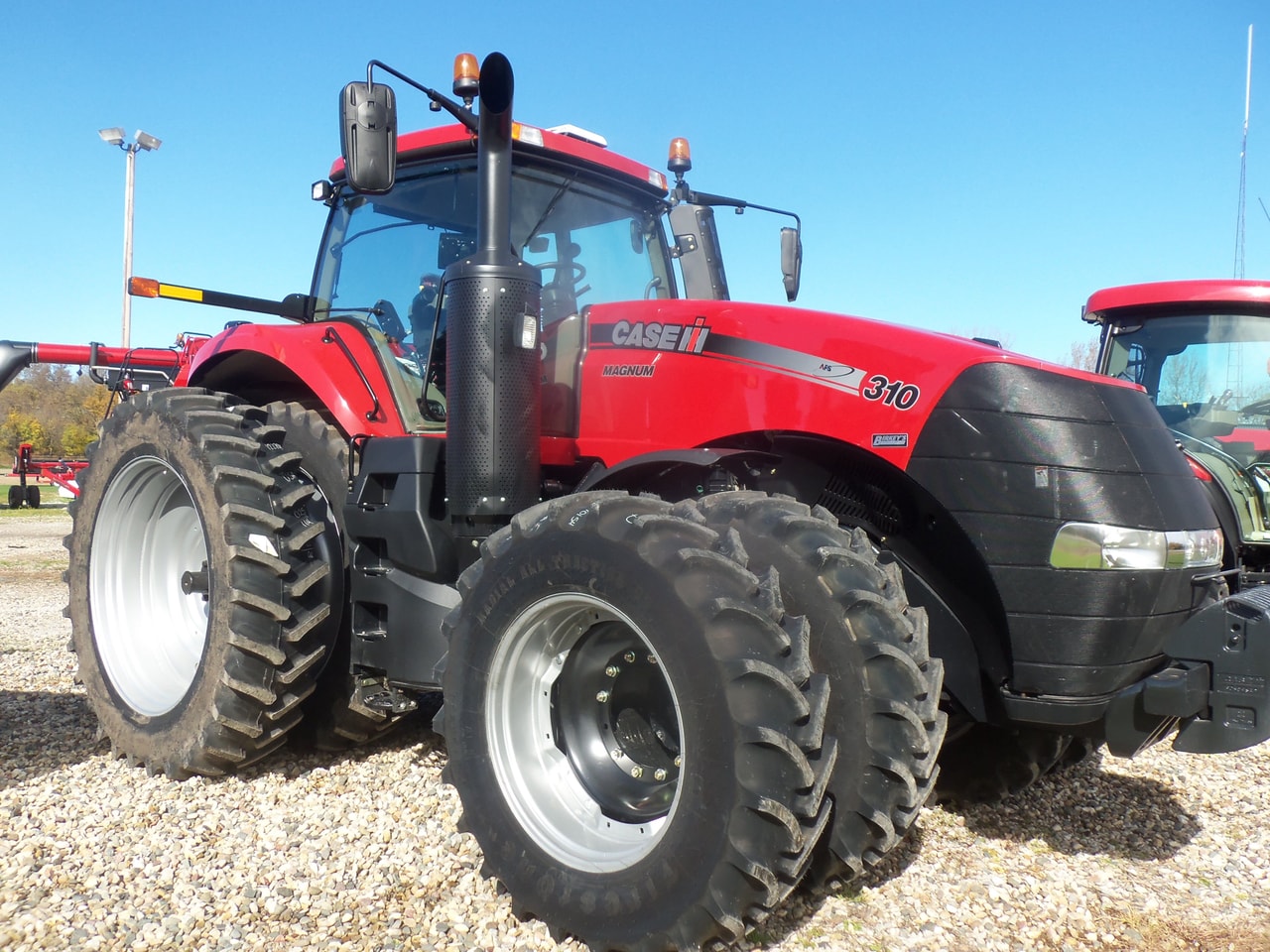
CaseIH Magnum 310
The CaseIH Magnum 310 is a powerful row crop tractor built for serious farming. It has a strong 6-cylinder diesel engine that makes 310 horsepower, which is very high compared to other tractors. The engine is big too, with a displacement of 541.9 cubic inches. This tractor is ready for tough jobs. The Magnum 310 is a 4-wheel drive tractor with a full power shift transmission. It has 19 forward gears and 4 reverse gears, giving farmers lots of options for different tasks. The tractor is big, measuring 234.3 inches long and 128.5 inches tall. It's heavy too, weighing 20,670 pounds, which is above average. This weight helps it grip the ground well. The tractor has a rear hitch for attaching tools and a hydraulic system for powering equipment.
ManufacturerCaseIHPower310 hpEngine6-cylTransFull Power Shift, Creeper
Quick specs
- Category
- Row Crop
- Engine Power Output
- 310hp
- Operating Weight
- 20,670 lb
- Transmission
- Full Power Shift, Creeper
At a glance
How the Magnum 310 compares
vs. Row Crop medianDistribution
Engine Power (hp)
Across all Row Crop tractors
310 hp · 94th
This model
12
Median 138 hp
283
This modelRow Crop tractorsMediann = 1,206
The Magnum 310 ranks at the 94th percentile for engine power among recorded row crop tractors.
Overview
About the CaseIH Magnum 310
The CaseIH Magnum 310 is a powerful row crop tractor built for serious farming. It has a strong 6-cylinder diesel engine that makes 310 horsepower, which is very high compared to other tractors. The engine is big too, with a displacement of 541.9 cubic inches. This tractor is ready for tough jobs. The Magnum 310 is a 4-wheel drive tractor with a full power shift transmission. It has 19 forward gears and 4 reverse gears, giving farmers lots of options for different tasks. The tractor is big, measuring 234.3 inches long and 128.5 inches tall. It's heavy too, weighing 20,670 pounds, which is above average. This weight helps it grip the ground well. The tractor has a rear hitch for attaching tools and a hydraulic system for powering equipment.
Full specifications
Every recorded spec
General
| Manufacturer | CaseIH |
|---|---|
| Model | Magnum 310 |
| Category | Row Crop tractor |
| Type | 4x4 MFWD 4WD |
| Operating weight | 20,670lb |
Engine
| Make | CDC |
|---|---|
| Power | 310hp |
| Cylinders | 6 |
| Displacement | 541.9ci |
| Bore | 4.49in |
| Stroke | 5.69in |
Transmission
| Type | Full Power Shift, Creeper |
|---|---|
| Forward gears | 19 |
| Reverse gears | 4 |
Chassis & drive
| Chassis | 4x4 MFWD 4WD |
|---|---|
| Drive | 4WD |
| Steering | Hydrostatic Power |
Hydraulics
| Type | Pressure Flow Compensating |
|---|
Dimensions
| Length | 234.3in |
|---|---|
| Width | 100.4in |
| Height | 128.5in |
| Operating weight | 20,670lb |
Head to head
Magnum 310 vs. Row Crop median
How the CaseIH Magnum 310 compares to other Row Crop tractors
| Spec | This model | Row Crop median | Difference | Percentile |
|---|---|---|---|---|
| Engine Power | 310 hp | 138 hp | +125% | 94th |
| Engine Displacement | 542 ci | 391 ci | +39% | 95th |
| Cylinders | 6 | 6 | at median | 50th |
| Forward Gears | 19 | 16 | +19% | 68th |
| Operating Weight | 20,670 lb | 12,307 lb | +68% | 86th |
| Length | 234 in | 180 in | +30% | 94th |
| Width | 100 in | 91.2 in | +10% | 86th |
| Height | 129 in | 114 in | +13% | 88th |
Medians and percentiles are computed from the row crop tractors in our database with a recorded value for each spec (sample sizes 806–1,417 models).
Compare to tractors with similar specs
Commonly compared CaseIH tractors
| Tractor | Engine Power | Operating Weight | Years | Compare |
|---|---|---|---|---|
| CaseIH 9350 | 310 hp | 28,720 lb | — | Compare → |
| CaseIH Magnum 305 | 304 hp | 21,585 lb | — | Compare → |
| CaseIH MX305 Magnum | 304 hp | 21,585 lb | — | Compare → |
| CaseIH Optum 300 | 300 hp | 23,149 lb | — | Compare → |
| CaseIH Magnum 335 | 330 hp | 21,350 lb | — | Compare → |
Commonly compared tractors with similar horsepower from other brands
| Tractor | Engine Power | Operating Weight | Years | Compare |
|---|---|---|---|---|
| CBT TM310 | 310 hp | 30,000 lb | — | Compare → |
| Challenger 65E | 310 hp | 34,195 lb | — | Compare → |
| Allis Chalmers 4W-305 | 305 hp | 27,100 lb | 1982–1985 | Compare → |
| AGCO DT275B | 316.6 hp | 25,840 lb | 2009–2010 | Compare → |
| Allis Chalmers 8550 | 300 hp | 27,040 lb | 1978–1981 | Compare → |
Explore
CaseIH siblings


Explore
Similar-spec models


Gallery
CaseIH Magnum 310 photos


FAQ
Common questions
How powerful is the CaseIH Magnum 310?
The CaseIH Magnum 310 has an engine power output of 310 hp. It is powered by a 6-cylinder engine displacing 541.9 ci.
What hydraulics does the CaseIH Magnum 310 have?
The CaseIH Magnum 310 uses a Pressure Flow Compensating hydraulic system.
What three-point hitch category does the CaseIH Magnum 310 use?
The CaseIH Magnum 310 has a Category 3 three-point hitch.
What is the working weight of the CaseIH Magnum 310?
The operating weight of the CaseIH Magnum 310 is approximately 20,670 lb.
What type of transmission does the CaseIH Magnum 310 have?
The CaseIH Magnum 310 uses a Full Power Shift, Creeper transmission offering 19 forward gears.
What routine service does the CaseIH Magnum 310 need?
Regular maintenance for the CaseIH Magnum 310 includes checking and changing engine oil, hydraulic fluid, and filters, plus routine inspections as recommended in the owner's manual. Always follow the manufacturer's maintenance schedule for specific intervals and procedures.