Row CropPerformance profile
CaseIH Puma 220
The CaseIH Puma 220 is a powerful row crop tractor built for tough farm work. It has a strong 6-cylinder diesel engine made by FPT. This engine puts out 220 horsepower, which is very high compared to other tractors. It has a turbocharger and air cooling to help it run well. The engine size is above average at 410.6 cubic inches. This tractor has four-wheel drive and power steering, making it easy to control in fields. It uses an 18-speed transmission that lets you shift gears without stopping. The Puma 220 weighs 15,900 pounds, which is above average for tractors. It has a very strong rear hitch that can lift up to 28,660 pounds, one of the highest capacities available. The tractor uses special farm tires and has a modern system to reduce harmful emissions.
ManufacturerCaseIHPower220 hpEngine6-cylTrans18-speed full power shift
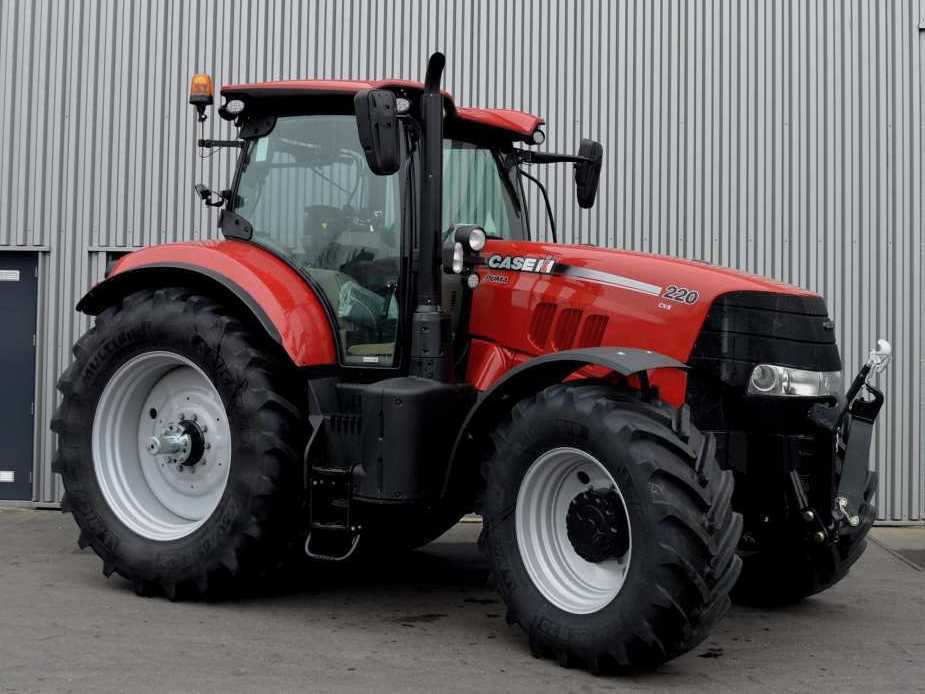
Quick specs
- Category
- Row Crop
- Engine Power Output
- 220hp
- Operating Weight
- 15,900 lb
- Transmission
- 18-speed full power shift
At a glance
How the Puma 220 compares
vs. Row Crop medianDistribution
Engine Power (hp)
Across all Row Crop tractors
220 hp · 82nd
This model
12
Median 138 hp
283
This modelRow Crop tractorsMediann = 1,206
The Puma 220 ranks at the 82nd percentile for engine power among recorded row crop tractors.
Overview
About the CaseIH Puma 220
The CaseIH Puma 220 is a powerful row crop tractor built for tough farm work. It has a strong 6-cylinder diesel engine made by FPT. This engine puts out 220 horsepower, which is very high compared to other tractors. It has a turbocharger and air cooling to help it run well. The engine size is above average at 410.6 cubic inches. This tractor has four-wheel drive and power steering, making it easy to control in fields. It uses an 18-speed transmission that lets you shift gears without stopping. The Puma 220 weighs 15,900 pounds, which is above average for tractors. It has a very strong rear hitch that can lift up to 28,660 pounds, one of the highest capacities available. The tractor uses special farm tires and has a modern system to reduce harmful emissions.
Full specifications
Every recorded spec
General
| Manufacturer | CaseIH |
|---|---|
| Model | Puma 220 |
| Category | Row Crop tractor |
| Type | 4x4 MFWD 4WD |
| Operating weight | 15,900lb |
Engine
| Make | FPT |
|---|---|
| Power | 220hp |
| Cylinders | 6 |
| Displacement | 410.6ci |
| Bore | 4.09in |
| Stroke | 5.2in |
Transmission
| Type | 18-speed full power shift |
|---|---|
| Forward gears | 18 |
| Reverse gears | 6 |
Chassis & drive
| Chassis | 4x4 MFWD 4WD |
|---|---|
| Drive | 4WD |
| Steering | Power |
Hydraulics
| Type | Closed center pressure flow compensating |
|---|
Dimensions
| Operating weight | 15,900lb |
|---|
Head to head
Puma 220 vs. Row Crop median
How the CaseIH Puma 220 compares to other Row Crop tractors
| Spec | This model | Row Crop median | Difference | Percentile |
|---|---|---|---|---|
| Engine Power | 220 hp | 138 hp | +59% | 82nd |
| Engine Displacement | 411 ci | 391 ci | +5% | 60th |
| Cylinders | 6 | 6 | at median | 50th |
| Forward Gears | 18 | 16 | +13% | 61st |
| Operating Weight | 15,900 lb | 12,307 lb | +29% | 70th |
| 3-Point Hitch Capacity | 28,660 lb | 11,023 lb | +160% | 93rd |
Medians and percentiles are computed from the row crop tractors in our database with a recorded value for each spec (sample sizes 279–1,417 models).
Compare to tractors with similar specs
Commonly compared CaseIH tractors
| Tractor | Engine Power | Operating Weight | Years | Compare |
|---|---|---|---|---|
| CaseIH Magnum 220 | 220 hp | 21,750 lb | — | Compare → |
| CaseIH Magnum 215 | 221 hp | 21,035 lb | — | Compare → |
| CaseIH MX215 Magnum | 221 hp | 21,035 lb | — | Compare → |
| CaseIH 2594 | 217 hp | 16,220 lb | 1984–1988 | Compare → |
| CaseIH 7150 | 215 hp | 18,587 lb | 1990–1993 | Compare → |
Commonly compared tractors with similar horsepower from other brands
| Tractor | Engine Power | Operating Weight | Years | Compare |
|---|---|---|---|---|
| Allis Chalmers 4W-220 | 220 hp | 21,475 lb | 1982–1984 | Compare → |
| Belarus MTZ-220 | 220 hp | — | — | Compare → |
| Allis Chalmers 440 | 218 hp | 20,230 lb | 1973–1977 | Compare → |
| AGCO RT180A | 216.2 hp | 17,460 lb | — | Compare → |
| AGCO DT180 | 215 hp | 18,500 lb | 2002–2004 | Compare → |
Explore
CaseIH siblings

Explore
Similar-spec models


Gallery
CaseIH Puma 220 photos


FAQ
Common questions
How much horsepower does the CaseIH Puma 220 have?
The CaseIH Puma 220 produces 220 hp from its 6-cylinder engine. Engine displacement is 410.6 ci.
What hydraulics does the CaseIH Puma 220 have?
The CaseIH Puma 220 uses a Closed center pressure flow compensating hydraulic system.
What three-point hitch category does the CaseIH Puma 220 use?
The CaseIH Puma 220 has a Category Category 3 three-point hitch rated to lift 28,660 lb.
How much does the CaseIH Puma 220 weigh?
The CaseIH Puma 220 weighs about 15,900 lb in operating condition.
What transmission is in the CaseIH Puma 220?
Transmission on the CaseIH Puma 220 is 18-speed full power shift, with 18 forward speeds.
What maintenance does the CaseIH Puma 220 require?
Like any tractor, the CaseIH Puma 220 needs periodic engine oil and filter changes, hydraulic fluid checks, and regular greasing and inspection. The owner's manual lists the manufacturer's recommended service intervals.