UtilityPerformance profile
Iseki TF317
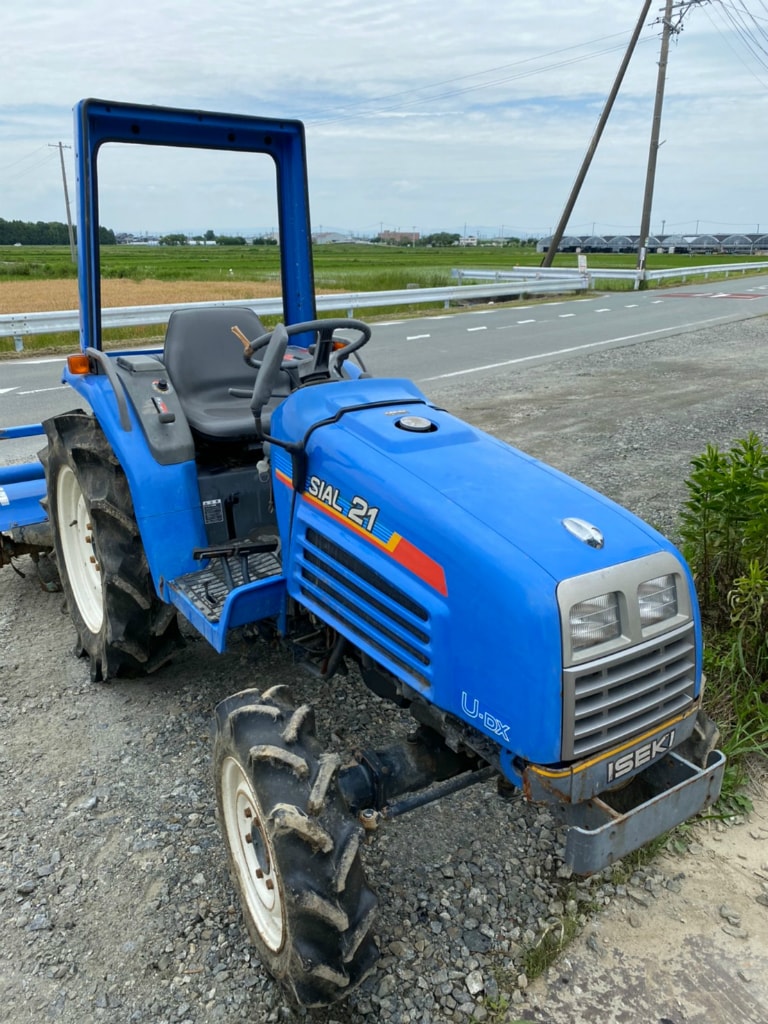
The Iseki TF317 is a compact utility tractor built for small farms and big gardens. It has a 4-wheel drive system that helps it work well on different types of ground. The tractor is powered by a small diesel engine with three cylinders. This engine is cooled by liquid and doesn't use a turbocharger. The TF317 has a simple transmission with 9 forward gears and 3 reverse gears. It's not very big, measuring about 108 inches long and 44 inches wide. The tractor weighs 1,543 pounds, which is light compared to many other tractors. It has a strong rear hitch that can lift up to 3,582 pounds, which is very good for its size. The tractor starts with an electric starter, making it easy to use. It also has a roll-over protection system (ROPS) to keep the driver safe.
ManufacturerIsekiPower16.8 hpEngine3-cylTransUnsynchronized
Quick specs
- Category
- Utility
- Engine Power Output
- 17hp
- Operating Weight
- 1,543 lb
- Transmission
- Unsynchronized
At a glance
How the TF317 compares
vs. Utility medianDistribution
Engine Power (hp)
Across all Utility tractors
16.8 hp · 4th
This model
9
Median 55 hp
177
This modelUtility tractorsMediann = 5,383
The TF317 ranks at the 4th percentile for engine power among recorded utility tractors.
Overview
About the Iseki TF317
The Iseki TF317 is a compact utility tractor built for small farms and big gardens. It has a 4-wheel drive system that helps it work well on different types of ground. The tractor is powered by a small diesel engine with three cylinders. This engine is cooled by liquid and doesn't use a turbocharger. The TF317 has a simple transmission with 9 forward gears and 3 reverse gears. It's not very big, measuring about 108 inches long and 44 inches wide. The tractor weighs 1,543 pounds, which is light compared to many other tractors. It has a strong rear hitch that can lift up to 3,582 pounds, which is very good for its size. The tractor starts with an electric starter, making it easy to use. It also has a roll-over protection system (ROPS) to keep the driver safe.
Full specifications
Every recorded spec
General
| Manufacturer | Iseki |
|---|---|
| Model | TF317 |
| Category | Utility tractor |
| Type | 4x4 MFWD 4WD |
| Operating weight | 1,543lb |
Engine
| Make | Iseki |
|---|---|
| Model | E3100 |
| Power | 16.8hp |
| Cylinders | 3 |
| Displacement | 61.4ci |
| Bore | 2.91in |
| Stroke | 3.07in |
Transmission
| Type | Unsynchronized |
|---|---|
| Forward gears | 9 |
| Reverse gears | 3 |
Chassis & drive
| Chassis | 4x4 MFWD 4WD |
|---|---|
| Drive | MFWD/4WD |
| Steering | Manual |
Dimensions
| Length | 108.3in |
|---|---|
| Width | 44.3in |
| Height | 89.4in |
| Operating weight | 1,543lb |
Tires
| Front | 5.00-12 |
|---|---|
| Rear | 315/75D-15 |
Capacities
| Cooling system | 1.35gal |
|---|
Head to head
TF317 vs. Utility median
How the Iseki TF317 compares to other Utility tractors
| Spec | This model | Utility median | Difference | Percentile |
|---|---|---|---|---|
| Engine Power | 16.8 hp | 55 hp | -69% | 4th |
| Engine Displacement | 61.4 ci | 183 ci | -66% | 7th |
| Cylinders | 3 | 4 | -25% | 23rd |
| Forward Gears | 9 | 12 | -25% | 35th |
| Operating Weight | 1,543 lb | 5,303 lb | -71% | 6th |
| Length | 108 in | 137 in | -21% | 15th |
| Width | 44.3 in | 66 in | -33% | 9th |
| Height | 89.4 in | 94.1 in | -5% | 39th |
| 3-Point Hitch Capacity | 3,582 lb | 3,197 lb | +12% | 59th |
Medians and percentiles are computed from the utility tractors in our database with a recorded value for each spec (sample sizes 1,083–5,720 models).
Compare to tractors with similar specs
Commonly compared Iseki tractors
| Tractor | Engine Power | Operating Weight | Years | Compare |
|---|---|---|---|---|
| Iseki TU170 | 16.8 hp | 1,532 lb | — | Compare → |
| Iseki TU1700 | 16.8 hp | 1,548 lb | 1981–1984 | Compare → |
| Iseki TU1701 | 16.8 hp | 1,543 lb | — | Compare → |
| Iseki TM170 | 17 hp | 1,301 lb | — | Compare → |
| Iseki TM217 | 17 hp | 1,345 lb | — | Compare → |
Commonly compared tractors with similar horsepower from other brands
| Tractor | Engine Power | Operating Weight | Years | Compare |
|---|---|---|---|---|
| Ariens GT17 | 17 hp | 926 lb | 1979–1987 | Compare → |
| Bolens G172 | 17 hp | 1,056 lb | — | Compare → |
| Bolens G174 | 17 hp | 1,144 lb | — | Compare → |
| Bolens H1704 | 17 hp | 1,268 lb | — | Compare → |
| Allis Chalmers 616 | 16.5 hp | 1,499 lb | 1972–1973 | Compare → |
Explore
Iseki siblings
Explore
Similar-spec models


Gallery
Iseki TF317 photos


FAQ
Common questions
How much horsepower does the Iseki TF317 have?
The Iseki TF317 produces 16.8 hp from its 3-cylinder engine. Engine displacement is 61.4 ci.
What transmission is in the Iseki TF317?
Transmission on the Iseki TF317 is Unsynchronized, with 9 forward speeds.
What size tires does the Iseki TF317 use?
Factory rubber for the Iseki TF317 is 5.00-12 front tires and 315/75D-15 rear tires.
What hitch category is the Iseki TF317?
The Iseki TF317 uses a Category Category 3 hitch with a lift capacity of 3,582 lb.
How much does the Iseki TF317 weigh?
The Iseki TF317 weighs about 1,543 lb in operating condition.
What maintenance does the Iseki TF317 require?
Like any tractor, the Iseki TF317 needs periodic engine oil and filter changes, hydraulic fluid checks, and regular greasing and inspection. The owner's manual lists the manufacturer's recommended service intervals.