UtilityPerformance profile
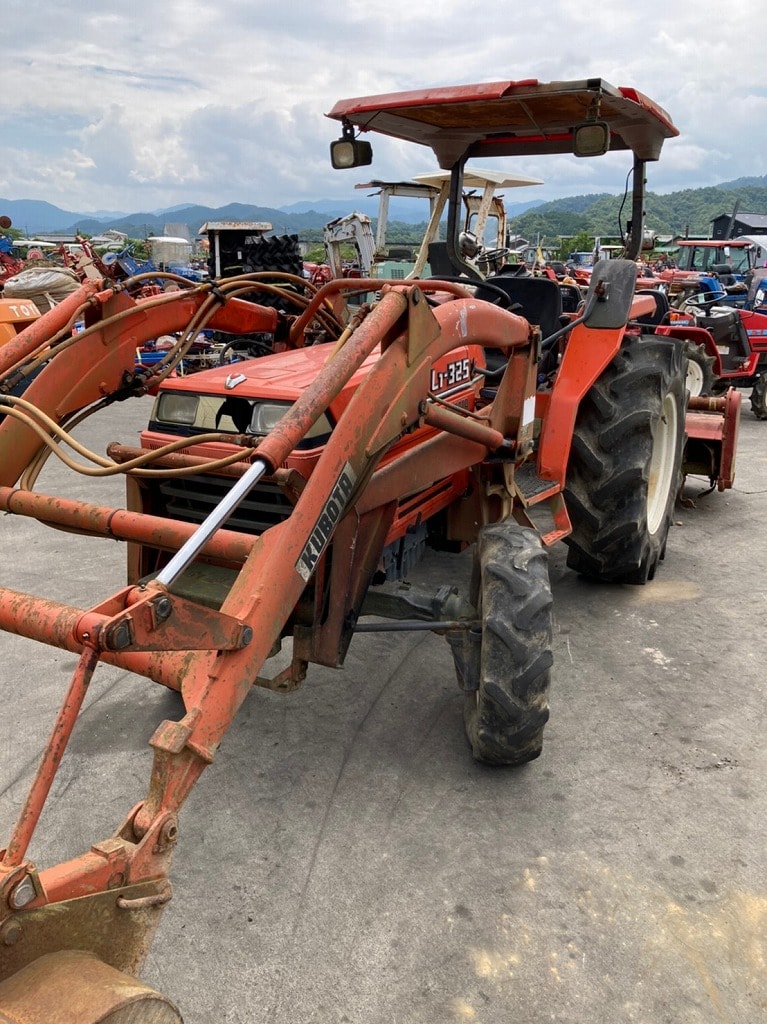
Kubota L1-325
The Kubota L1-325 is a utility tractor that was made from 1988 to 1991. It's a strong and reliable machine, perfect for farmers who need help with their daily tasks. This tractor has four-wheel drive, which means it can handle tough ground and get work done in all kinds of conditions. The L1-325 is powered by a Kubota V1702 engine. This engine is diesel-fueled and has four cylinders. It's liquid-cooled, which helps it run smoothly even when working hard. The engine can produce 31.6 horsepower, which is about average for tractors of its size. It has a 16-speed transmission for both forward and reverse, giving the driver lots of options for different jobs. The tractor is compact, measuring 125.2 inches long, 59.8 inches wide, and 90.9 inches tall with the roll-over protection system. It weighs 3,064 pounds, making it sturdy but not too heavy.
ManufacturerKubotaPower31.6 hpEngine4-cyl
Quick specs
- Category
- Utility
- Engine Power Output
- 32hp
- Operating Weight
- 3,064 lb
At a glance
How the L1-325 compares
vs. Utility medianDistribution
Engine Power (hp)
Across all Utility tractors
31.6 hp · 24th
This model
9
Median 55 hp
177
This modelUtility tractorsMediann = 5,383
The L1-325 ranks at the 24th percentile for engine power among recorded utility tractors.
Overview
About the Kubota L1-325
The Kubota L1-325 is a utility tractor that was made from 1988 to 1991. It's a strong and reliable machine, perfect for farmers who need help with their daily tasks. This tractor has four-wheel drive, which means it can handle tough ground and get work done in all kinds of conditions. The L1-325 is powered by a Kubota V1702 engine. This engine is diesel-fueled and has four cylinders. It's liquid-cooled, which helps it run smoothly even when working hard. The engine can produce 31.6 horsepower, which is about average for tractors of its size. It has a 16-speed transmission for both forward and reverse, giving the driver lots of options for different jobs. The tractor is compact, measuring 125.2 inches long, 59.8 inches wide, and 90.9 inches tall with the roll-over protection system. It weighs 3,064 pounds, making it sturdy but not too heavy.
Full specifications
Every recorded spec
General
| Manufacturer | Kubota |
|---|---|
| Model | L1-325 |
| Category | Utility tractor |
| Type | 4x4 MFWD 4WD |
| Years built | 1988–1991 |
| Operating weight | 3,064lb |
Engine
| Make | Kubota |
|---|---|
| Model | V1702 |
| Power | 31.6hp |
| Cylinders | 4 |
| Displacement | 105.7ci |
| Bore | 3.1in |
| Stroke | 3.6in |
Transmission
| Forward gears | 16 |
|---|---|
| Reverse gears | 16 |
Chassis & drive
| Chassis | 4x4 MFWD 4WD |
|---|---|
| Drive | 4WD |
Dimensions
| Length | 125.2in |
|---|---|
| Width | 59.8in |
| Height | 90.9in |
| Operating weight | 3,064lb |
Tires
| Rear | 13.6-24 |
|---|
Head to head
L1-325 vs. Utility median
How the Kubota L1-325 compares to other Utility tractors
| Spec | This model | Utility median | Difference | Percentile |
|---|---|---|---|---|
| Engine Power | 31.6 hp | 55 hp | -43% | 24th |
| Engine Displacement | 106 ci | 183 ci | -42% | 25th |
| Cylinders | 4 | 4 | at median | 50th |
| Forward Gears | 16 | 12 | +33% | 73rd |
| Operating Weight | 3,064 lb | 5,303 lb | -42% | 24th |
| Length | 125 in | 137 in | -8% | 34th |
| Width | 59.8 in | 66 in | -9% | 36th |
| Height | 90.9 in | 94.1 in | -3% | 42nd |
Medians and percentiles are computed from the utility tractors in our database with a recorded value for each spec (sample sizes 3,933–5,720 models).
Compare to tractors with similar specs
Commonly compared Kubota tractors
| Tractor | Engine Power | Operating Weight | Years | Compare |
|---|---|---|---|---|
| Kubota GL32 | 31.6 hp | 2,668 lb | 1990–1992 | Compare → |
| Kubota GL320 | 31.6 hp | 2,822 lb | 1993–1995 | Compare → |
| Kubota L3202 | 31.6 hp | — | 1978–1985 | Compare → |
| Kubota L2950 | 31.8 hp | 2,445 lb | 1990–1993 | Compare → |
| Kubota B3200 | 32 hp | 1,764 lb | 2008–2015 | Compare → |
Commonly compared tractors with similar horsepower from other brands
| Tractor | Engine Power | Operating Weight | Years | Compare |
|---|---|---|---|---|
| Allis Chalmers 5030 | 31 hp | 2,530 lb | 1979–1985 | Compare → |
| Allis Chalmers D12 | 31 hp | 2,800 lb | 1959–1968 | Compare → |
| Antonio Carraro Tigre 4000 | 31 hp | — | — | Compare → |
| Belarus 250AS | 31 hp | 6,614 lb | 1979–1987 | Compare → |
| Allis Chalmers UC | 30.93 hp | 5,710 lb | — | Compare → |
Explore
Kubota siblings

Explore
Similar-spec models

Gallery
Kubota L1-325 photos


FAQ
Common questions
When was the Kubota L1-325 in production?
Kubota L1-325 production started in 1988 and ended in 1991.
How much does the Kubota L1-325 weigh?
The Kubota L1-325 weighs about 3,064 lb in operating condition.
What size tires does the Kubota L1-325 use?
Factory rubber for the Kubota L1-325 is 13.6-24 rear tires.
What hitch category is the Kubota L1-325?
The Kubota L1-325 uses a Category I hitch.
How much horsepower does the Kubota L1-325 have?
The Kubota L1-325 produces 31.6 hp from its 4-cylinder engine. Engine displacement is 105.7 ci.
What maintenance does the Kubota L1-325 require?
Like any tractor, the Kubota L1-325 needs periodic engine oil and filter changes, hydraulic fluid checks, and regular greasing and inspection. The owner's manual lists the manufacturer's recommended service intervals.