 Brand sibling
Minneapolis Threshing Machine Company
Minneapolis Threshing Machine Company 15-30
- Power
- —
- Weight
- 5,600
- Years
- —
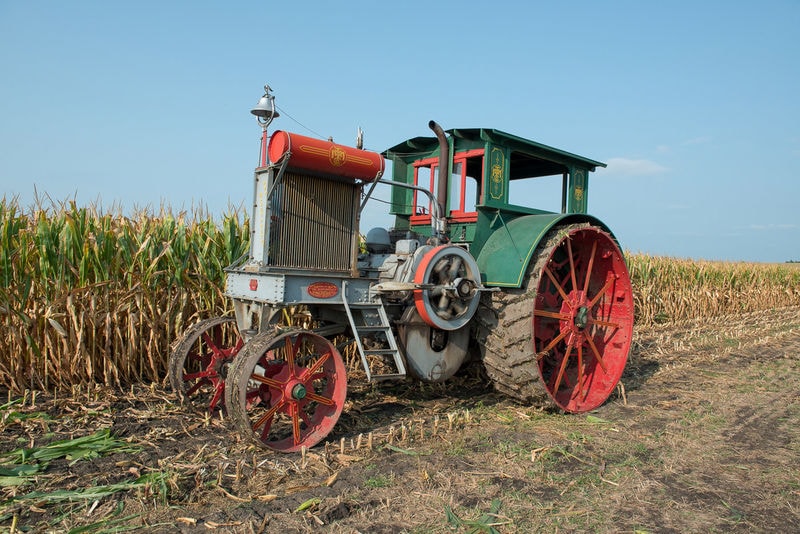
The Minneapolis Threshing Machine Company 40-80 is a big, powerful utility tractor from the early days of farming. It has a very large 4-cylinder engine that runs on kerosene fuel. This tractor is built for heavy work, weighing a hefty 22,500 pounds. It's quite long at 206 inches, wide at 108 inches, and tall at 122 inches. This tractor is a 2-wheel drive model with manual steering and a simple gear transmission. It has 2 forward gears and 1 reverse gear. The engine is liquid-cooled and naturally aspirated, meaning it doesn't use a turbocharger. One unique feature is its steel wheels instead of rubber tires. The tractor is started with a hand crank, which was common for its time. It has a very low engine speed of 500 RPM, which is unusual compared to modern tractors but typical for its era.
Quick specs
Overview
The Minneapolis Threshing Machine Company 40-80 is a big, powerful utility tractor from the early days of farming. It has a very large 4-cylinder engine that runs on kerosene fuel. This tractor is built for heavy work, weighing a hefty 22,500 pounds. It's quite long at 206 inches, wide at 108 inches, and tall at 122 inches. This tractor is a 2-wheel drive model with manual steering and a simple gear transmission. It has 2 forward gears and 1 reverse gear. The engine is liquid-cooled and naturally aspirated, meaning it doesn't use a turbocharger. One unique feature is its steel wheels instead of rubber tires. The tractor is started with a hand crank, which was common for its time. It has a very low engine speed of 500 RPM, which is unusual compared to modern tractors but typical for its era.
Full specifications
| Manufacturer | Minneapolis Threshing Machine Company |
|---|---|
| Model | 40-80 |
| Category | Utility tractor |
| Type | 4x2 2WD |
| Operating weight | 22,500lb |
| Make | Minneapolis Threshing Machine Company |
|---|---|
| Cylinders | 4 |
| Displacement | 1,486.2ci |
| Bore | 7.25in |
| Stroke | 9in |
| Type | Gear |
|---|---|
| Forward gears | 2 |
| Reverse gears | 1 |
| Chassis | 4x2 2WD |
|---|---|
| Drive | 2WD |
| Steering | Manual |
| Length | 206in |
|---|---|
| Width | 108in |
| Height | 122in |
| Operating weight | 22,500lb |
Head to head
| Spec | This model | Utility median | Difference | Percentile |
|---|---|---|---|---|
| Engine Displacement | 1,486 ci | 183 ci | +712% | 99th |
| Cylinders | 4 | 4 | at median | 50th |
| Forward Gears | 2 | 12 | -83% | 1st |
| Operating Weight | 22,500 lb | 5,303 lb | +324% | 95th |
| Length | 206 in | 137 in | +51% | 95th |
| Width | 108 in | 66 in | +64% | 98th |
| Height | 122 in | 94.1 in | +30% | 95th |
Medians and percentiles are computed from the utility tractors in our database with a recorded value for each spec (sample sizes 3,933–5,720 models).
| Tractor | Engine Power | Operating Weight | Years | Compare |
|---|---|---|---|---|
| Minneapolis Threshing Machine Company 15-30 | — | 5,600 lb | — | Compare → |
| Minneapolis Threshing Machine Company 17-30 A | — | 6,100 lb | — | Compare → |
| Minneapolis Threshing Machine Company 20-40 | — | 12,000 lb | — | Compare → |
| Minneapolis Threshing Machine Company 25-50 | — | 17,000 lb | — | Compare → |
| Tractor | Engine Power | Operating Weight | Years | Compare |
|---|---|---|---|---|
| Advance-Rumely 6A | — | 6,370 lb | — | Compare → |
| Advance-Rumely DoAll | — | 3,702 lb | — | Compare → |
| Advance-Rumely OilPull B 25/45 | — | 25,000 lb | — | Compare → |
| Advance-Rumely OilPull E 30/60 | — | 26,300 lb | — | Compare → |
| Advance-Rumely OilPull F 15/30 | — | 16,500 lb | — | Compare → |
Explore
Brand siblingMinneapolis Threshing Machine Company
Minneapolis Threshing Machine Company
Minneapolis Threshing Machine Company
 Brand sibling
Minneapolis Threshing Machine Company
Explore
Gallery


FAQ
The Minneapolis Threshing Machine Company 40-80 is equipped with a 4-cylinder engine displacing 1,486.2 ci.
The Minneapolis Threshing Machine Company 40-80 has a Category Category 3 three-point hitch.
The operating weight of the Minneapolis Threshing Machine Company 40-80 is approximately 22,500 lb.
The Minneapolis Threshing Machine Company 40-80 uses a Gear transmission offering 2 forward gears.
Regular maintenance for the Minneapolis Threshing Machine Company 40-80 includes checking and changing engine oil, hydraulic fluid, and filters, plus routine inspections as recommended in the owner's manual. Always follow the manufacturer's maintenance schedule for specific intervals and procedures.
