 Brand sibling
Row CropPerformance profile
AGCO RT100
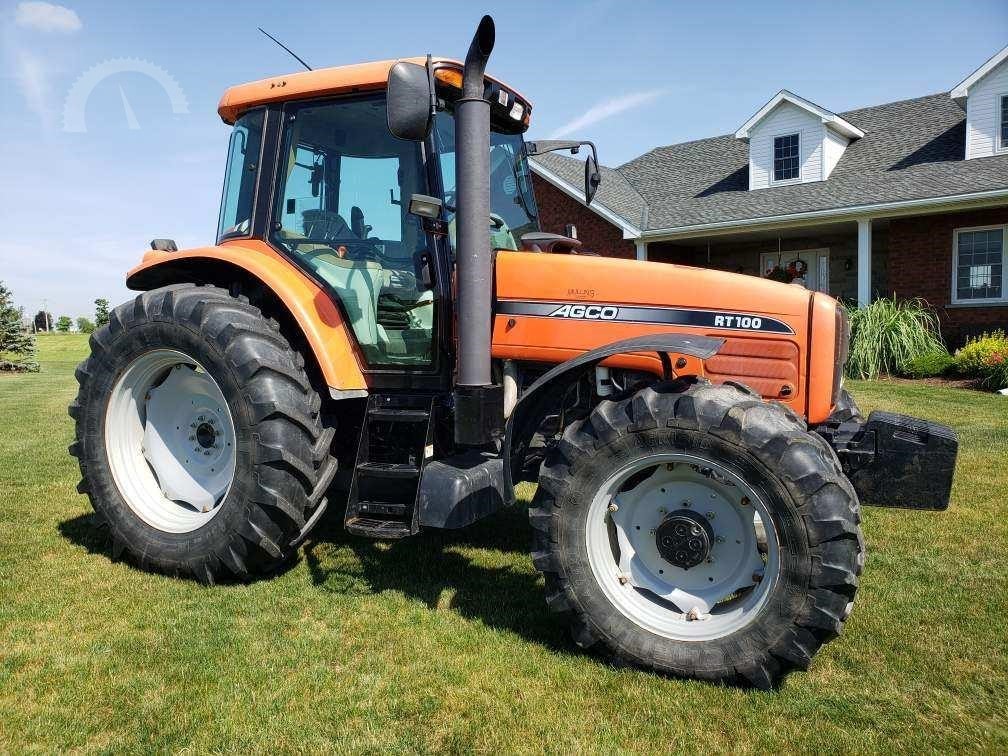
The AGCO RT100 is a powerful row crop tractor designed for farmers who need a reliable machine for their fields. This tractor has a 2-wheel drive system and uses hydrostatic power steering, making it easy to control. It comes with a special transmission called a CVT, which lets the driver change speeds smoothly without shifting gears. Under the hood, the RT100 has a strong Cummins diesel engine with 6 cylinders. The engine is turbocharged and liquid-cooled, providing 128 horsepower at 2200 RPM. This power is above average compared to similar tractors. The tractor weighs 15,055 pounds, which is also above average for its class. It has a closed center hydraulic system and a comfortable cab for the operator. The RT100 is built to handle tough farm work while keeping the driver comfortable and in control.
ManufacturerAGCOPower128 hpEngine6-cylTransContinuously variable transmission (CVT)
Quick specs
- Category
- Row Crop
- Engine Power Output
- 128hp
- Operating Weight
- 15,055 lb
- Transmission
- Continuously variable transmission (CVT)
At a glance
How the RT100 compares
vs. Row Crop medianDistribution
Engine Power (hp)
Across all Row Crop tractors
128 hp · 44th
This model
12
Median 138 hp
283
This modelRow Crop tractorsMediann = 1,206
The RT100 ranks at the 44th percentile for engine power among recorded row crop tractors.
Overview
About the AGCO RT100
The AGCO RT100 is a powerful row crop tractor designed for farmers who need a reliable machine for their fields. This tractor has a 2-wheel drive system and uses hydrostatic power steering, making it easy to control. It comes with a special transmission called a CVT, which lets the driver change speeds smoothly without shifting gears. Under the hood, the RT100 has a strong Cummins diesel engine with 6 cylinders. The engine is turbocharged and liquid-cooled, providing 128 horsepower at 2200 RPM. This power is above average compared to similar tractors. The tractor weighs 15,055 pounds, which is also above average for its class. It has a closed center hydraulic system and a comfortable cab for the operator. The RT100 is built to handle tough farm work while keeping the driver comfortable and in control.
Full specifications
Every recorded spec
General
| Manufacturer | AGCO |
|---|---|
| Model | RT100 |
| Category | Row Crop tractor |
| Type | 4x2 2WD |
| Operating weight | 15,055lb |
Engine
| Make | Cummins |
|---|---|
| Power | 128hp |
| Cylinders | 6 |
| Displacement | 408ci |
| Bore | 4.09in |
| Stroke | 5.18in |
Transmission
| Type | Continuously variable transmission (CVT) |
|---|
Chassis & drive
| Chassis | 4x2 2WD |
|---|---|
| Drive | 2WD |
| Steering | Hydrostatic power |
| Cab | Cab |
Hydraulics
| Type | Closed center pressure flow compensating (PFC) |
|---|
Dimensions
| Operating weight | 15,055lb |
|---|
Head to head
RT100 vs. Row Crop median
How the AGCO RT100 compares to other Row Crop tractors
| Spec | This model | Row Crop median | Difference | Percentile |
|---|---|---|---|---|
| Engine Power | 128 hp | 138 hp | -7% | 44th |
| Engine Displacement | 408 ci | 391 ci | +4% | 57th |
| Cylinders | 6 | 6 | at median | 50th |
| Operating Weight | 15,055 lb | 12,307 lb | +22% | 67th |
Medians and percentiles are computed from the row crop tractors in our database with a recorded value for each spec (sample sizes 1,206–1,417 models).
Compare to tractors with similar specs
Commonly compared AGCO tractors
| Tractor | Engine Power | Operating Weight | Years | Compare |
|---|---|---|---|---|
| AGCO RT115 | 121.4 hp | 12,900 lb | — | Compare → |
| AGCO RT110A | 116.9 hp | 12,200 lb | — | Compare → |
| AGCO RT135 | 143.94 hp | 15,525 lb | — | Compare → |
| AGCO RT120 | 150 hp | 15,055 lb | — | Compare → |
| AGCO DT160 | 160 hp | 18,500 lb | 2002–2004 | Compare → |
Commonly compared tractors with similar horsepower from other brands
| Tractor | Engine Power | Operating Weight | Years | Compare |
|---|---|---|---|---|
| Allis Chalmers HD11AG Series B | 126.5 hp | 25,000 lb | — | Compare → |
| Allis Chalmers HD11AG | 130 hp | 23,000 lb | — | Compare → |
| Belarus 1221 | 130 hp | 10,230 lb | — | Compare → |
| Belarus 1221 MIG | 130 hp | 11,350 lb | — | Compare → |
| Allis Chalmers 7030 | 131.09 hp | 12,430 lb | 1973–1974 | Compare → |
Explore
AGCO siblings

Explore
Similar-spec models


Gallery
AGCO RT100 photos


FAQ
Common questions
How much horsepower does the AGCO RT100 have?
The AGCO RT100 produces 128 hp from its 6-cylinder engine. Engine displacement is 408 ci.
How much does the AGCO RT100 weigh?
The AGCO RT100 weighs about 15,055 lb in operating condition.
What transmission is in the AGCO RT100?
Transmission on the AGCO RT100 is Continuously variable transmission (CVT).
What hydraulics does the AGCO RT100 have?
The AGCO RT100 uses a Closed center pressure flow compensating (PFC) hydraulic system.
What three-point hitch category does the AGCO RT100 use?
The AGCO RT100 has a Category II/IIIN three-point hitch.
What maintenance does the AGCO RT100 require?
Like any tractor, the AGCO RT100 needs periodic engine oil and filter changes, hydraulic fluid checks, and regular greasing and inspection. The owner's manual lists the manufacturer's recommended service intervals.