 Same brand
Agricultural tractorsSpec sheet
Allis Chalmers 160
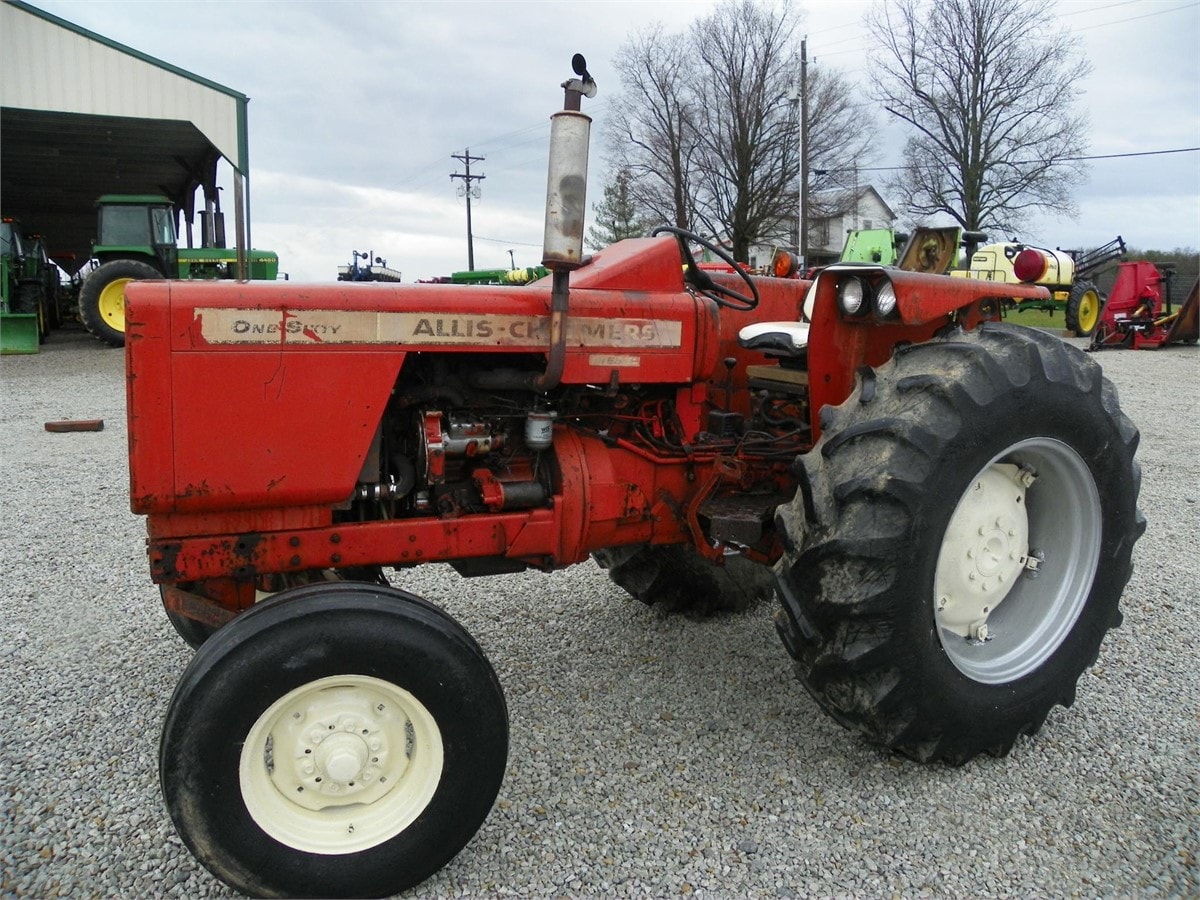
The Allis Chalmers 160 is a sturdy agricultural tractor made from 1970 to 1975. It was actually built by Renault in France. This 2-wheel drive tractor has a 4x2 chassis and uses hydrostatic power steering, making it easy to control in the fields. Under the hood, the Allis Chalmers 160 has a Perkins AD 3.152 engine. This diesel engine has 3 cylinders and is liquid-cooled. It can produce 40 horsepower at 2250 rpm, which is good for many farm tasks. The tractor has a partial synchronized transmission with 10 forward gears and 2 reverse gears, giving farmers lots of options for different jobs. It also has an optional PTO (power take-off) that can run at 540 rpm, useful for powering other farm equipment. This tractor is built tough, weighing 4,674 pounds. It's 143.7 inches long and 55.9 inches tall, making it a mid-sized option for farms. The Allis Chalmers 160 has ag tires on both front and back, with larger rear tires for better traction. It uses a category II hitch, which lets it work with many common farm implements. With its electric starter and differential mechanical dry disc brakes, this tractor is both easy to use and safe to operate.
ManufacturerAllis ChalmersPower40 hp(29.8 kW)Class40–60 HP tractors →Engine3-cylinderTransmissionPartial Synchronized
Key specifications
- Category
- Agricultural
- Engine power
- 40hp
- Operating weight
- 4,674 lb
- Transmission
- Partial Synchronized
Category comparison
160 compared with its category
vs. Agricultural medianDistribution
Engine Power (hp)
All recorded Agricultural tractors
40 hp · 6th
This model
13
Median 110 hp
282
This modelAgricultural tractorsMediann = 1,028
The 160 ranks at the 6th percentile for engine power among recorded agricultural tractors.
Overview
About the Allis Chalmers 160
The Allis Chalmers 160 is a sturdy agricultural tractor made from 1970 to 1975. It was actually built by Renault in France. This 2-wheel drive tractor has a 4x2 chassis and uses hydrostatic power steering, making it easy to control in the fields. Under the hood, the Allis Chalmers 160 has a Perkins AD 3.152 engine. This diesel engine has 3 cylinders and is liquid-cooled. It can produce 40 horsepower at 2250 rpm, which is good for many farm tasks. The tractor has a partial synchronized transmission with 10 forward gears and 2 reverse gears, giving farmers lots of options for different jobs. It also has an optional PTO (power take-off) that can run at 540 rpm, useful for powering other farm equipment. This tractor is built tough, weighing 4,674 pounds. It's 143.7 inches long and 55.9 inches tall, making it a mid-sized option for farms. The Allis Chalmers 160 has ag tires on both front and back, with larger rear tires for better traction. It uses a category II hitch, which lets it work with many common farm implements. With its electric starter and differential mechanical dry disc brakes, this tractor is both easy to use and safe to operate.
Full specifications
Recorded specifications
General
| Manufacturer | Allis Chalmers |
|---|---|
| Model | 160 |
| Category | Agricultural tractor |
| Type | 4x2 2WD |
| Years built | 1970–1975 |
| Operating weight | 4,674lb(2,120 kg) |
Engine
| Make | Perkins |
|---|---|
| Model | AD 3.152 |
| Power | 40hp(29.83 kW) |
| Cylinders | 3 |
| Displacement | 152.7ci(2.5 L) |
| Bore | 3.6in(91.44 mm) |
| Stroke | 5in(127 mm) |
Transmission
| Type | Partial Synchronized |
|---|---|
| Forward gears | 10 |
| Reverse gears | 2 |
Chassis & drive
| Chassis | 4x2 2WD |
|---|---|
| Drive | 2WD |
| Steering | Hydrostatic Power |
| Brakes | Differential Mechanical Dry Disc |
Power take-off
| Rear PTO | Optional Transmission or Live PTO |
|---|---|
| PTO speed | 540rpm |
Dimensions
| Length | 143.7in(3,650 mm) |
|---|---|
| Height | 55.9in(1,420 mm) |
| Operating weight | 4,674lb(2,120 kg) |
Capacities
| Cooling system | 2gal(7.57 L) |
|---|
Closest alternatives
160 compared with the nearest models by horsepower
By engine horsepower, the nearest agricultural models to the 160 are the Fiat 421R and the Fiat 431R. The Fiat 421R matches it on rated power and weighs 1,590 lb less, so it is lighter for its power, which favors PTO and transport work over heavy draft. The Fiat 431R matches it on rated power and weighs 1,320 lb less, carrying 84 lb per horsepower against 117 lb. Of the 3 models, the 160 has the highest weight per horsepower at 117 lb per hp.
| Spec | Allis Chalmers 160 | Fiat 421R | Fiat 431R |
|---|---|---|---|
| Engine power | 40 hp29.8 kW | 40 hp29.8 kW | 40 hp29.8 kW |
| Operating weight | 4,674 lb2,120 kg | 3,087 lb1,400 kg | 3,350 lb1,520 kg |
| Weight per hp | 117 lb/hp71 kg/kW | 77 lb/hp47 kg/kW | 84 lb/hp51 kg/kW |
| Displacement | 152.7 ci2.5 L | 138.5 ci2.27 L | 138.5 ci2.27 L |
| Cylinders | 3 | 4 | 4 |
| Transmission | Partial Synchronized | Gear | Gear |
| Drive | 2WD | 2WD | 2WD |
Calculators
Calculators for the 160
PTO power
About 33 to 36 PTO hp
Estimated from the 40 hp engine rating. The calculator also estimates drawbar power by surface.
Implement sizing
Implements a 40 hp tractor can run
Maximum size is about a 5 ft rotary cutter or a 4 ft tiller. The calculator also sizes discs, plows and balers.
Ballast
136 lb per PTO hp as listed
The calculator gives the target weight and front/rear split for each job.
Units
40 hp is 29.8 kW
The converter gives kW and metric PS values, as used on European spec sheets.
Category medians
160 vs. Agricultural median
Allis Chalmers 160 compared with other Agricultural tractors
| Spec | This model | Agricultural median | Difference | Percentile |
|---|---|---|---|---|
| Engine Power | 40 hp | 110 hp | -64% | 6th |
| Engine Displacement | 153 ci | 336 ci | -54% | 5th |
| Cylinders | 3 | 5.5 | -45% | 8th |
| Forward Gears | 10 | 16 | -37% | 23rd |
| Operating Weight | 4,674 lb | 10,914 lb | -57% | 10th |
| Length | 144 in | 173 in | -17% | 22nd |
| Height | 55.9 in | 111 in | -49% | 5th |
Medians and percentiles are calculated from the agricultural tractors in the database that have a recorded value for each specification (sample size 795–1,130 models).
Same manufacturer
Other Allis Chalmers models


Other manufacturers
Models with similar horsepower


Gallery
Allis Chalmers 160 photos


FAQ
Frequently asked questions
What years was the Allis Chalmers 160 manufactured?
Production of the Allis Chalmers 160 ran from 1970 through 1975.
What is the working weight of the Allis Chalmers 160?
The operating weight of the Allis Chalmers 160 is approximately 4,674 lb.
What type of transmission does the Allis Chalmers 160 have?
The Allis Chalmers 160 uses a Partial Synchronized transmission offering 10 forward gears.
What hitch category is the Allis Chalmers 160?
The Allis Chalmers 160 uses a Category II hitch.
How powerful is the Allis Chalmers 160?
The Allis Chalmers 160 has an engine power output of 40 hp. It is powered by a 3-cylinder engine displacing 152.7 ci.
What routine service does the Allis Chalmers 160 need?
Regular maintenance for the Allis Chalmers 160 includes checking and changing engine oil, hydraulic fluid, and filters, plus routine inspections as recommended in the owner's manual. Always follow the manufacturer's maintenance schedule for specific intervals and procedures.