 Brand sibling
Row CropPerformance profile
Allis Chalmers 7020
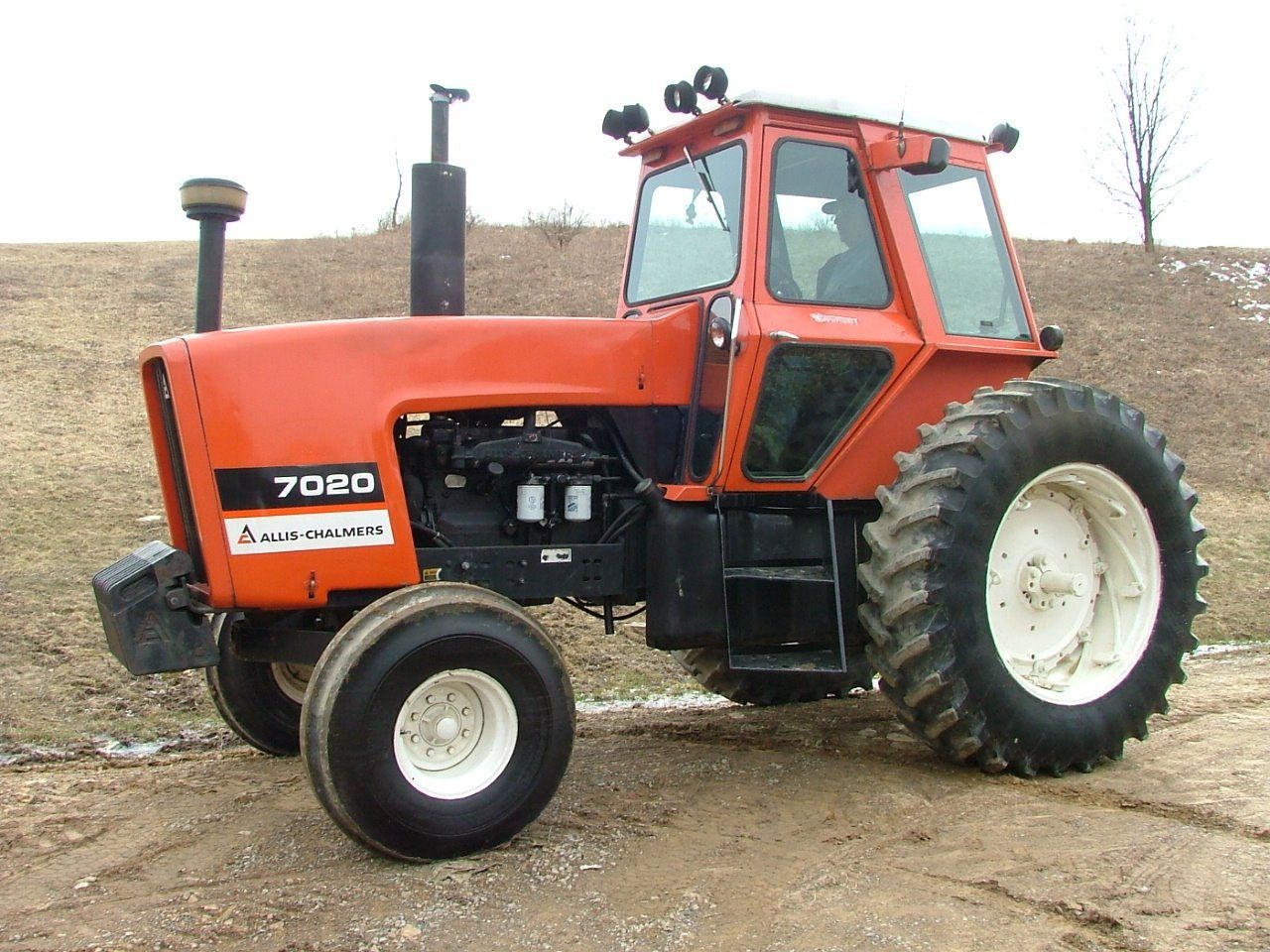
The Allis Chalmers 7020 is a powerful row crop tractor made from 1977 to 1981. It has a 2WD drive system and a strong diesel engine with 6 cylinders. The engine can produce 123.79 hp, which is above average for tractors of its time. It has a partial power shift transmission with 6 forward gears and 2 reverse gears, making it easy to change speeds while working in the field. This tractor is built tough, weighing 11,770 lb and measuring 163 inches long, 92.6 inches wide, and 116 inches tall. It has a three-point hitch at the back that can lift up to 6,680 lb, which is good for handling heavy farm equipment. The 7020 also has two PTO speeds (540 and 1000 rpm) for running different tools. The tractor comes with an Acousta-Cab, which helps keep the noise down for the driver. It has big rear tires (20.8-38) for good traction in the fields and smaller front tires (11.00-16) for easy steering.
ManufacturerAllis ChalmersPower123.79 hpEngine6-cylTransPartial power shift
Quick specs
- Category
- Row Crop
- Engine Power Output
- 124hp
- Operating Weight
- 11,770 lb
- Transmission
- Partial power shift
At a glance
How the 7020 compares
vs. Row Crop medianDistribution
Engine Power (hp)
Across all Row Crop tractors
123.79 hp · 41st
This model
12
Median 138 hp
283
This modelRow Crop tractorsMediann = 1,206
The 7020 ranks at the 41st percentile for engine power among recorded row crop tractors.
Overview
About the Allis Chalmers 7020
The Allis Chalmers 7020 is a powerful row crop tractor made from 1977 to 1981. It has a 2WD drive system and a strong diesel engine with 6 cylinders. The engine can produce 123.79 hp, which is above average for tractors of its time. It has a partial power shift transmission with 6 forward gears and 2 reverse gears, making it easy to change speeds while working in the field. This tractor is built tough, weighing 11,770 lb and measuring 163 inches long, 92.6 inches wide, and 116 inches tall. It has a three-point hitch at the back that can lift up to 6,680 lb, which is good for handling heavy farm equipment. The 7020 also has two PTO speeds (540 and 1000 rpm) for running different tools. The tractor comes with an Acousta-Cab, which helps keep the noise down for the driver. It has big rear tires (20.8-38) for good traction in the fields and smaller front tires (11.00-16) for easy steering.
Full specifications
Every recorded spec
General
| Manufacturer | Allis Chalmers |
|---|---|
| Model | 7020 |
| Category | Row Crop tractor |
| Type | 4x2 2WD |
| Years built | 1977–1981 |
| Operating weight | 11,770lb |
Engine
| Make | Allis Chalmers |
|---|---|
| Model | 649I |
| Power | 123.79hp |
| Cylinders | 6 |
| Displacement | 301ci |
| Bore | 3.88in |
| Stroke | 4.25in |
Transmission
| Type | Partial power shift |
|---|---|
| Forward gears | 6 |
| Reverse gears | 2 |
Chassis & drive
| Chassis | 4x2 2WD |
|---|---|
| Drive | 2WD |
| Steering | Hydrostatic power |
| Brakes | Differential hydraulic wet disc |
| Cab | Acousta-Cab |
Hydraulics
| Type | Closed center |
|---|
Power take-off
| Rear PTO | Independent |
|---|---|
| PTO speed | 540rpm |
Dimensions
| Length | 163in |
|---|---|
| Width | 92.6in |
| Height | 116in |
| Operating weight | 11,770lb |
Tires
| Front | 11.00-16 |
|---|---|
| Rear | 20.8-38 |
Capacities
| Cooling system | 6.5gal |
|---|
Head to head
7020 vs. Row Crop median
How the Allis Chalmers 7020 compares to other Row Crop tractors
| Spec | This model | Row Crop median | Difference | Percentile |
|---|---|---|---|---|
| Engine Power | 124 hp | 138 hp | -10% | 41st |
| Engine Displacement | 301 ci | 391 ci | -23% | 32nd |
| Cylinders | 6 | 6 | at median | 50th |
| Forward Gears | 6 | 16 | -62% | 11th |
| Operating Weight | 11,770 lb | 12,307 lb | -4% | 46th |
| Length | 163 in | 180 in | -9% | 27th |
| Width | 92.6 in | 91.2 in | +2% | 55th |
| Height | 116 in | 114 in | +2% | 59th |
| 3-Point Hitch Capacity | 6,680 lb | 11,023 lb | -39% | 20th |
Medians and percentiles are computed from the row crop tractors in our database with a recorded value for each spec (sample sizes 279–1,417 models).
Compare to tractors with similar specs
Commonly compared Allis Chalmers tractors
| Tractor | Engine Power | Operating Weight | Years | Compare |
|---|---|---|---|---|
| Allis Chalmers D21 Series II | 121 hp | 9,502 lb | 1965–1969 | Compare → |
| Allis Chalmers 8010 | 119 hp | 12,630 lb | 1982–1985 | Compare → |
| Allis Chalmers 7030 | 131.09 hp | 12,430 lb | 1973–1974 | Compare → |
| Allis Chalmers 210 | 136 hp | 12,425 lb | 1970–1973 | Compare → |
| Allis Chalmers 7045 | 136.65 hp | 14,500 lb | 1978–1981 | Compare → |
Commonly compared tractors with similar horsepower from other brands
| Tractor | Engine Power | Operating Weight | Years | Compare |
|---|---|---|---|---|
| CaseIH 1255 XL | 125 hp | — | — | Compare → |
| AGCO RT115 | 121.4 hp | 12,900 lb | — | Compare → |
| AGCO RT100 | 128 hp | 15,055 lb | — | Compare → |
| Agrinar T-120 | 119.3 hp | 4,580 lb | — | Compare → |
| Belarus 1221 | 130 hp | 10,230 lb | — | Compare → |
Explore
Allis Chalmers siblings

Explore
Similar-spec models


Gallery
Allis Chalmers 7020 photos


FAQ
Common questions
What years was the Allis Chalmers 7020 manufactured?
Production of the Allis Chalmers 7020 ran from 1977 through 1981.
What hitch category is the Allis Chalmers 7020?
The Allis Chalmers 7020 uses a Category III/II hitch with a lift capacity of 6,680 lb.
How powerful is the Allis Chalmers 7020?
The Allis Chalmers 7020 has an engine power output of 123.79 hp. It is powered by a 6-cylinder engine displacing 301 ci.
What is the working weight of the Allis Chalmers 7020?
The operating weight of the Allis Chalmers 7020 is approximately 11,770 lb.
What type of transmission does the Allis Chalmers 7020 have?
The Allis Chalmers 7020 uses a Partial power shift transmission offering 6 forward gears.
What type of hydraulic system does the Allis Chalmers 7020 use?
Hydraulics on the Allis Chalmers 7020 are Closed center.
What size tires does the Allis Chalmers 7020 use?
Factory rubber for the Allis Chalmers 7020 is 11.00-16 front tires and 20.8-38 rear tires.
What routine service does the Allis Chalmers 7020 need?
Regular maintenance for the Allis Chalmers 7020 includes checking and changing engine oil, hydraulic fluid, and filters, plus routine inspections as recommended in the owner's manual. Always follow the manufacturer's maintenance schedule for specific intervals and procedures.