 Brand sibling
Standard TreadPerformance profile
Avery 20-35
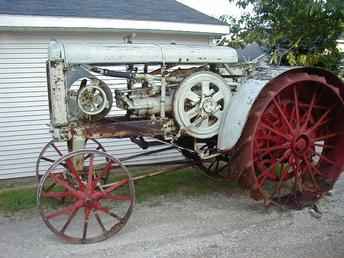
The Avery 20-35 is a sturdy four-wheel tractor made in 1923. It has a 2WD drive type and a manual transmission with 2 forward gears and 1 reverse gear. The tractor is powered by an Avery engine that runs on kerosene fuel. This engine has 4 cylinders arranged in an opposed horizontal layout, which is unusual for tractors. It can produce 37.33 hp at 900 rpm, making it strong enough for many farm tasks. This tractor is built tough, with steel wheels instead of rubber tires. It's quite big, measuring 152 inches long, 68 inches wide, and 80 inches tall. The Avery 20-35 is also heavy, weighing 7,550 pounds. Some special features include removable cylinder sleeves and a shoe clutch in the engine. It can work well on both drawbar and belt power tasks, with good fuel efficiency for its time. The large rear wheels, measuring 60 inches in diameter, help it move through fields with ease.
ManufacturerAveryPower37.33 hpEngine4-cylTransManual
Quick specs
- Category
- Standard Tread
- Engine Power Output
- 37hp
- Operating Weight
- 7,550 lb
- Transmission
- Manual
At a glance
How the 20-35 compares
vs. Standard Tread medianDistribution
Engine Power (hp)
Across all Standard Tread tractors
37.33 hp · 39th
This model
12
Median 45 hp
102
This modelStandard Tread tractorsMediann = 121
The 20-35 ranks at the 39th percentile for engine power among recorded standard tread tractors.
Overview
About the Avery 20-35
The Avery 20-35 is a sturdy four-wheel tractor made in 1923. It has a 2WD drive type and a manual transmission with 2 forward gears and 1 reverse gear. The tractor is powered by an Avery engine that runs on kerosene fuel. This engine has 4 cylinders arranged in an opposed horizontal layout, which is unusual for tractors. It can produce 37.33 hp at 900 rpm, making it strong enough for many farm tasks. This tractor is built tough, with steel wheels instead of rubber tires. It's quite big, measuring 152 inches long, 68 inches wide, and 80 inches tall. The Avery 20-35 is also heavy, weighing 7,550 pounds. Some special features include removable cylinder sleeves and a shoe clutch in the engine. It can work well on both drawbar and belt power tasks, with good fuel efficiency for its time. The large rear wheels, measuring 60 inches in diameter, help it move through fields with ease.
Full specifications
Every recorded spec
General
| Manufacturer | Avery |
|---|---|
| Model | 20-35 |
| Category | Standard Tread tractor |
| Type | Four-wheel |
| Years built | 1923+ |
| Operating weight | 7,550lb |
Engine
| Make | Avery |
|---|---|
| Power | 37.33hp |
| Cylinders | 4 |
| Displacement | 522.6ci |
| Bore | 4.88in |
| Stroke | 7in |
Transmission
| Type | Manual |
|---|---|
| Forward gears | 2 |
| Reverse gears | 1 |
Chassis & drive
| Chassis | Four-wheel |
|---|---|
| Drive | 2WD |
Dimensions
| Length | 152in |
|---|---|
| Width | 68in |
| Height | 80in |
| Operating weight | 7,550lb |
Head to head
20-35 vs. Standard Tread median
How the Avery 20-35 compares to other Standard Tread tractors
| Spec | This model | Standard Tread median | Difference | Percentile |
|---|---|---|---|---|
| Engine Power | 37.3 hp | 45 hp | -17% | 39th |
| Engine Displacement | 523 ci | 382 ci | +37% | 71st |
| Cylinders | 4 | 4 | at median | 50th |
| Forward Gears | 2 | 4 | -50% | 19th |
| Operating Weight | 7,550 lb | 6,834 lb | +10% | 59th |
| Length | 152 in | 137 in | +11% | 74th |
| Width | 68 in | 72.4 in | -6% | 36th |
| Height | 80 in | 72.3 in | +11% | 63rd |
Medians and percentiles are computed from the standard tread tractors in our database with a recorded value for each spec (sample sizes 121–367 models).
Compare to tractors with similar specs
Commonly compared Avery tractors
| Tractor | Engine Power | Operating Weight | Years | Compare |
|---|---|---|---|---|
| Avery 18-36 | 36.4 hp | 9,250 lb | — | Compare → |
| Avery 14-28 | — | 7,540 lb | — | Compare → |
| Avery 15-25 | — | 5,000 lb | — | Compare → |
| Avery 25-50 | — | 12,500 lb | 1920+ | Compare → |
| Avery 45285 | — | 7,500 lb | — | Compare → |
Commonly compared tractors with similar horsepower from other brands
| Tractor | Engine Power | Operating Weight | Years | Compare |
|---|---|---|---|---|
| Allis Chalmers D15 | 37.44 hp | 4,036 lb | — | Compare → |
| Allis Chalmers D14 | 37 hp | 3,500 lb | 1957–1960 | Compare → |
| Antonio Carraro Tigre 4000F | 38 hp | 2,756 lb | — | Compare → |
| Antonio Carraro TTR 4400 | 38 hp | 2,811 lb | — | Compare → |
| Antonio Carraro TTR 3800 | 36 hp | 2,150 lb | — | Compare → |
Explore
Avery siblings


Explore
Similar-spec models


Gallery
Avery 20-35 photos


FAQ
Common questions
When was the Avery 20-35 made?
The Avery 20-35 entered production in 1923.
What is the operating weight of the Avery 20-35?
In working trim, the Avery 20-35 comes in at roughly 7,550 lb.
Which transmission does the Avery 20-35 use?
The Avery 20-35 is equipped with a Manual transmission with 2 forward gears.
What is the engine power output of the Avery 20-35?
Rated engine output for the Avery 20-35 is 37.33 hp, delivered by a 4-cylinder engine. The engine displaces 522.6 ci.
How do I maintain a Avery 20-35?
Routine service for the Avery 20-35 covers engine oil and filter changes, hydraulic and coolant level checks, air filter cleaning, and scheduled inspections. Refer to the manufacturer's maintenance schedule for exact intervals.