UtilityPerformance profile
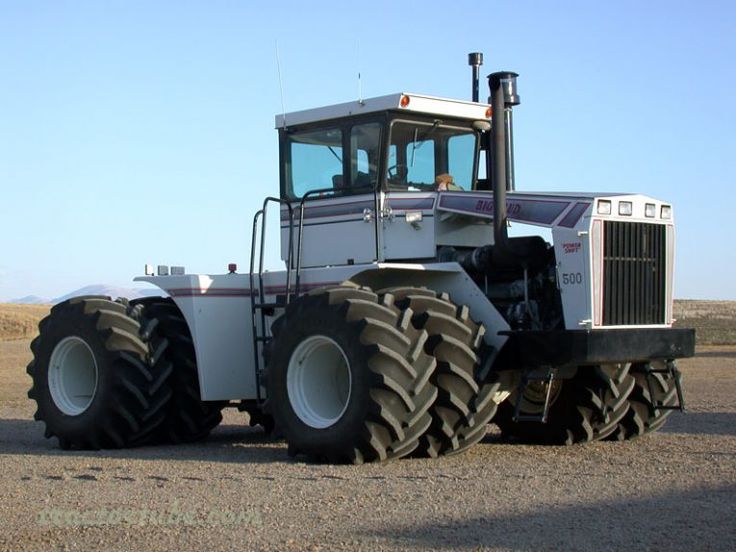
Big Bud 500
The Big Bud 500 is a powerful utility tractor built for tough jobs. It has a strong 4-wheel drive system and a special steering setup that makes it easy to control. The tractor can move forward in 12 different speeds and has 2 reverse speeds, giving the driver lots of options. Under the hood, the Big Bud 500 has a mighty Komatsu diesel engine with 6 cylinders. This engine is very big and strong compared to most other tractors. It can produce 500 horsepower, which is a lot of power for farm work. The engine starts up easily with an electric starter. This tractor is perfect for farmers who need to do heavy work on large fields.
ManufacturerBig BudPower500 hpEngine6-cylTransFull power shift
Quick specs
- Category
- Utility
- Engine Power Output
- 500hp
- Transmission
- Full power shift
At a glance
How the 500 compares
vs. Utility medianDistribution
Engine Power (hp)
Across all Utility tractors
500 hp · 99th
This model
9
Median 55 hp
177
500
This modelUtility tractorsMediann = 5,383
The 500 ranks at the 99th percentile for engine power among recorded utility tractors.
Overview
About the Big Bud 500
The Big Bud 500 is a powerful utility tractor built for tough jobs. It has a strong 4-wheel drive system and a special steering setup that makes it easy to control. The tractor can move forward in 12 different speeds and has 2 reverse speeds, giving the driver lots of options. Under the hood, the Big Bud 500 has a mighty Komatsu diesel engine with 6 cylinders. This engine is very big and strong compared to most other tractors. It can produce 500 horsepower, which is a lot of power for farm work. The engine starts up easily with an electric starter. This tractor is perfect for farmers who need to do heavy work on large fields.
Full specifications
Every recorded spec
General
| Manufacturer | Big Bud |
|---|---|
| Model | 500 |
| Category | Utility tractor |
| Type | 4x4 4WD |
Engine
| Make | Komatsu |
|---|---|
| Model | Komatsu 6-cyl diesel |
| Power | 500hp |
| Cylinders | 6 |
| Displacement | 1,168ci |
Transmission
| Type | Full power shift |
|---|---|
| Forward gears | 12 |
| Reverse gears | 2 |
Chassis & drive
| Chassis | 4x4 4WD |
|---|---|
| Drive | 4WD |
| Steering | Hydrostatic power |
Head to head
500 vs. Utility median
How the Big Bud 500 compares to other Utility tractors
| Spec | This model | Utility median | Difference | Percentile |
|---|---|---|---|---|
| Engine Power | 500 hp | 55 hp | +809% | 99th |
| Engine Displacement | 1,168 ci | 183 ci | +538% | 99th |
| Cylinders | 6 | 4 | +50% | 93rd |
| Forward Gears | 12 | 12 | at median | 50th |
Medians and percentiles are computed from the utility tractors in our database with a recorded value for each spec (sample sizes 4,941–5,720 models).
Compare to tractors with similar specs
Commonly compared Big Bud tractors
| Tractor | Engine Power | Operating Weight | Years | Compare |
|---|---|---|---|---|
| Big Bud 525/20 | 525 hp | — | — | Compare → |
| Big Bud 525/50 | 525 hp | 52,000 lb | — | Compare → |
| Big Bud KT525 | 525 hp | 43,000 lb | — | Compare → |
| Big Bud 450 | 450 hp | 40,000 lb | — | Compare → |
| Big Bud 450/20 | 450 hp | 41,500 lb | — | Compare → |
Commonly compared tractors with similar horsepower from other brands
| Tractor | Engine Power | Operating Weight | Years | Compare |
|---|---|---|---|---|
| CaseIH Steiger 500 | 500 hp | 39,492 lb | — | Compare → |
| CaseIH Steiger 500 Quadtrac | 500 hp | 54,290 lb | — | Compare → |
| CaseIH Steiger 500 Rowtrac | 500 hp | 43,510 lb | — | Compare → |
| CaseIH Steiger 485 | 485 hp | 38,500 lb | — | Compare → |
| CaseIH Steiger 480 | 480 hp | 44,645 lb | — | Compare → |
Explore
Big Bud siblings


Explore
Similar-spec models


Gallery
Big Bud 500 photos


FAQ
Common questions
How powerful is the Big Bud 500?
The Big Bud 500 has an engine power output of 500 hp. It is powered by a 6-cylinder engine displacing 1,168 ci.
What type of transmission does the Big Bud 500 have?
The Big Bud 500 uses a Full power shift transmission offering 12 forward gears.
What routine service does the Big Bud 500 need?
Regular maintenance for the Big Bud 500 includes checking and changing engine oil, hydraulic fluid, and filters, plus routine inspections as recommended in the owner's manual. Always follow the manufacturer's maintenance schedule for specific intervals and procedures.