 Brand sibling
UtilityPerformance profile
Kubota L225
The Kubota L225 is a utility tractor made from 1974 to 1976. It has a small diesel engine with three cylinders and 20.86 horsepower. This engine is naturally aspirated, which means it doesn't use a turbocharger. The tractor has a manual steering system and a gear shift transmission with 8 forward gears and 2 reverse gears. This Kubota model is lightweight, weighing 1,995 pounds. It has an open operator station, which means there's no cab to protect the driver from the weather. The tractor uses a Category I hitch for attaching implements. It has two PTO (power take-off) speeds: 540 rpm and 1000 rpm. These speeds let the tractor power different types of equipment. The L225 has agricultural tires on both the front and rear, making it suitable for farm work. It also has an electric starter, which makes it easy to turn on.
ManufacturerKubotaPower20.86 hpEngine3-cylTransGear shift with dry type clutch
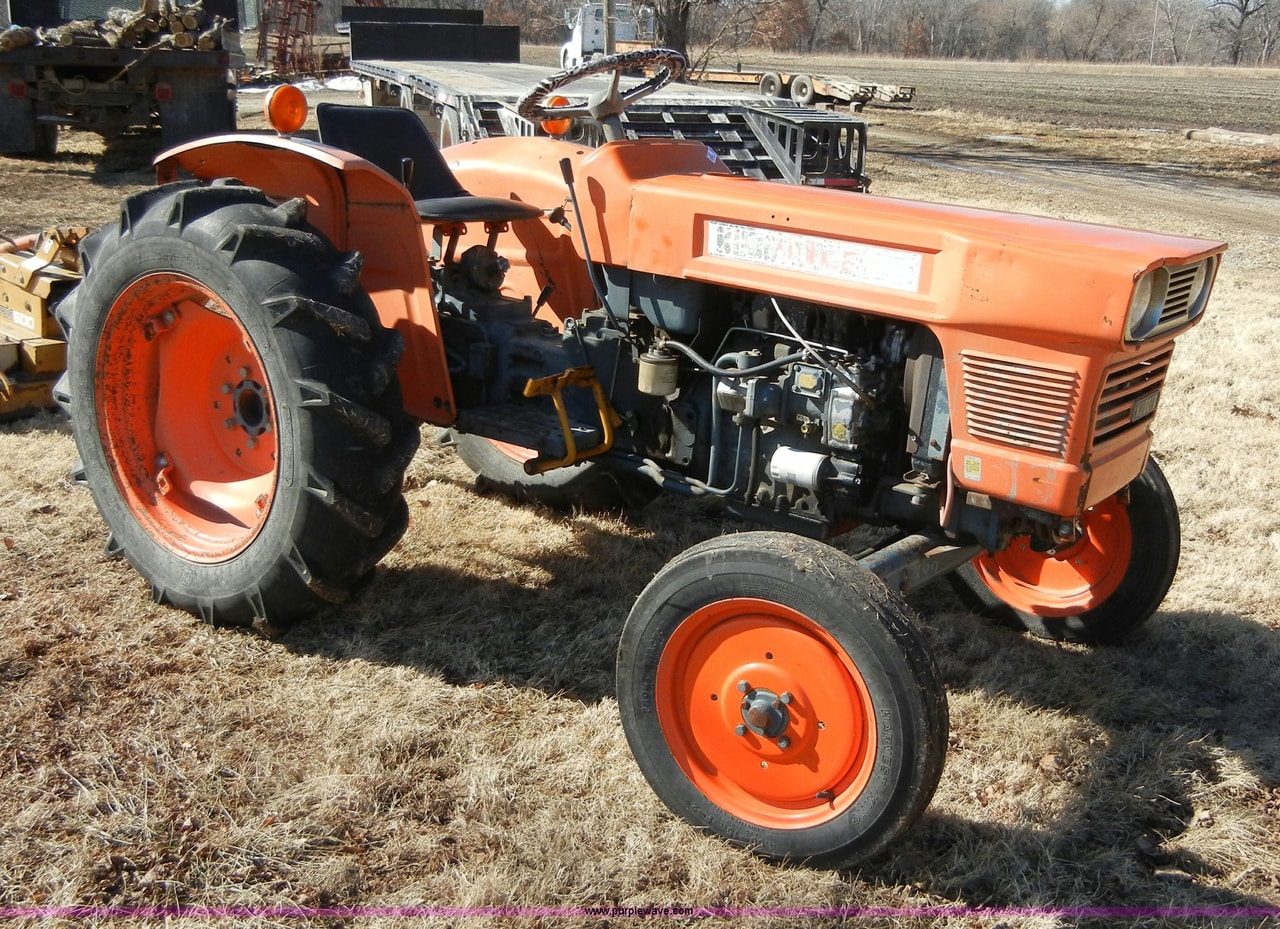
Quick specs
- Category
- Utility
- Engine Power Output
- 21hp
- Operating Weight
- 1,995 lb
- Transmission
- Gear shift with dry type clutch
At a glance
How the L225 compares
vs. Utility medianDistribution
Engine Power (hp)
Across all Utility tractors
20.86 hp · 9th
This model
9
Median 55 hp
177
This modelUtility tractorsMediann = 5,383
The L225 ranks at the 9th percentile for engine power among recorded utility tractors.
Overview
About the Kubota L225
The Kubota L225 is a utility tractor made from 1974 to 1976. It has a small diesel engine with three cylinders and 20.86 horsepower. This engine is naturally aspirated, which means it doesn't use a turbocharger. The tractor has a manual steering system and a gear shift transmission with 8 forward gears and 2 reverse gears. This Kubota model is lightweight, weighing 1,995 pounds. It has an open operator station, which means there's no cab to protect the driver from the weather. The tractor uses a Category I hitch for attaching implements. It has two PTO (power take-off) speeds: 540 rpm and 1000 rpm. These speeds let the tractor power different types of equipment. The L225 has agricultural tires on both the front and rear, making it suitable for farm work. It also has an electric starter, which makes it easy to turn on.
Full specifications
Every recorded spec
General
| Manufacturer | Kubota |
|---|---|
| Model | L225 |
| Category | Utility tractor |
| Years built | 1974–1976 |
| Operating weight | 1,995lb |
Engine
| Make | Kubota |
|---|---|
| Model | D1100A |
| Power | 20.86hp |
| Cylinders | 3 |
| Displacement | 68ci |
| Bore | 3in |
| Stroke | 3.23in |
Transmission
| Type | Gear shift with dry type clutch |
|---|---|
| Forward gears | 8 |
| Reverse gears | 2 |
Chassis & drive
| Steering | Manual |
|---|---|
| Brakes | Differential mechanical expanding shoe |
| Cab | Open operator station |
Power take-off
| PTO speed | 540rpm |
|---|
Dimensions
| Operating weight | 1,995lb |
|---|
Capacities
| Cooling system | 1.8gal |
|---|
Head to head
L225 vs. Utility median
How the Kubota L225 compares to other Utility tractors
| Spec | This model | Utility median | Difference | Percentile |
|---|---|---|---|---|
| Engine Power | 20.9 hp | 55 hp | -62% | 9th |
| Engine Displacement | 68 ci | 183 ci | -63% | 8th |
| Cylinders | 3 | 4 | -25% | 23rd |
| Forward Gears | 8 | 12 | -33% | 23rd |
| Operating Weight | 1,995 lb | 5,303 lb | -62% | 12th |
Medians and percentiles are computed from the utility tractors in our database with a recorded value for each spec (sample sizes 4,941–5,720 models).
Compare to tractors with similar specs
Commonly compared Kubota tractors
| Tractor | Engine Power | Operating Weight | Years | Compare |
|---|---|---|---|---|
| Kubota B2320 | 20.9 hp | 1,477 lb | 2008–2015 | Compare → |
| Kubota B2320N | 20.9 hp | 1,335 lb | 2008–2015 | Compare → |
| Kubota B2100 | 21 hp | 1,500 lb | 1995–1999 | Compare → |
| Kubota B2110 | 21 hp | 1,472 lb | 2000–2005 | Compare → |
| Kubota B7500 | 21 hp | 1,323 lb | 2000–2003 | Compare → |
Commonly compared tractors with similar horsepower from other brands
| Tractor | Engine Power | Operating Weight | Years | Compare |
|---|---|---|---|---|
| Bobcat CT120 | 21 hp | 2,055 lb | 2008–2010 | Compare → |
| Bolens G212 G2102 | 21 hp | 1,588 lb | — | Compare → |
| Bolens G214 G2104 | 21 hp | 1,676 lb | — | Compare → |
| Branson 2100 | 21 hp | 1,891 lb | — | Compare → |
| Bobcat CT1021 | 21.1 hp | 1,488 lb | — | Compare → |
Explore
Kubota siblings


Explore
Similar-spec models


Gallery
Kubota L225 photos


FAQ
Common questions
What years was the Kubota L225 manufactured?
Production of the Kubota L225 ran from 1974 through 1976.
What type of transmission does the Kubota L225 have?
The Kubota L225 uses a Gear shift with dry type clutch transmission offering 8 forward gears.
What three-point hitch category does the Kubota L225 use?
The Kubota L225 has a Category I three-point hitch.
How powerful is the Kubota L225?
The Kubota L225 has an engine power output of 20.86 hp. It is powered by a 3-cylinder engine displacing 68 ci.
What is the working weight of the Kubota L225?
The operating weight of the Kubota L225 is approximately 1,995 lb.
What routine service does the Kubota L225 need?
Regular maintenance for the Kubota L225 includes checking and changing engine oil, hydraulic fluid, and filters, plus routine inspections as recommended in the owner's manual. Always follow the manufacturer's maintenance schedule for specific intervals and procedures.