UtilityPerformance profile
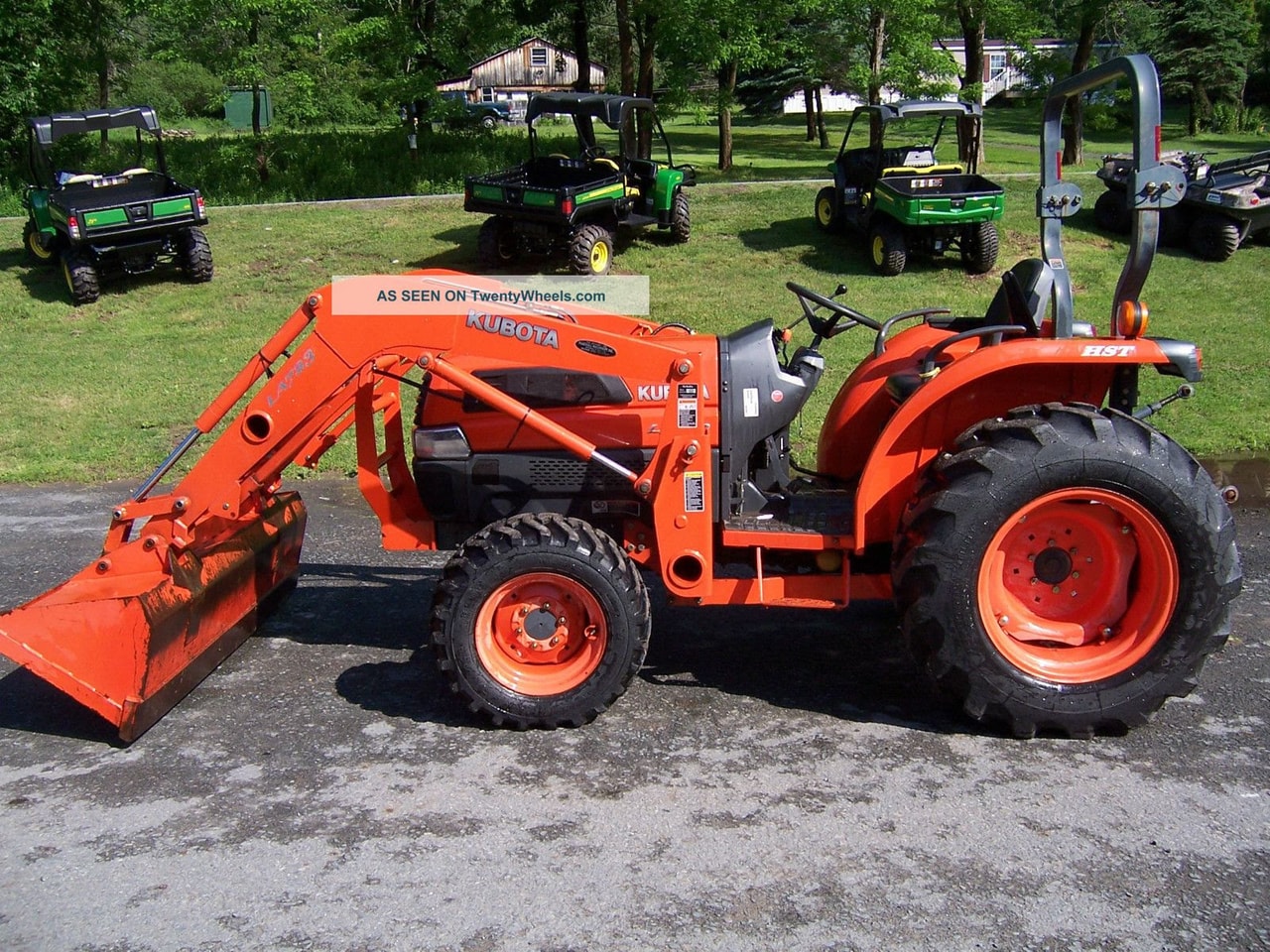
Kubota L5030GST
The Kubota L5030GST is a versatile utility tractor built for tough jobs on the farm. It has a strong 4-cylinder engine that makes 52.2 hp, which is about average power for its class. The engine is liquid-cooled and uses a special injection system to run smoothly. This tractor is compact but capable, measuring 68.4 inches wide and 93.6 inches tall. One of the best features of the L5030GST is its Glide Shift Transmission. This gives the driver 12 forward gears and 8 reverse gears, making it easy to find the right speed for any task. The tractor has four-wheel drive, which helps it grip the ground well in tough conditions. It also has a strong three-point hitch at the back that can lift up to 2,976.3 pounds, which is above average for tractors like this. This means it can handle a wide range of attachments for different farm jobs.
ManufacturerKubotaPower52.2 hpEngine4-cylTransGST (Glide Shift Transmission)
Quick specs
- Category
- Utility
- Engine Power Output
- 52hp
- Operating Weight
- 3,703.8 lb
- Transmission
- GST (Glide Shift Transmission)
At a glance
How the L5030GST compares
vs. Utility medianDistribution
Engine Power (hp)
Across all Utility tractors
52.2 hp · 48th
This model
9
Median 55 hp
177
This modelUtility tractorsMediann = 5,383
The L5030GST ranks at the 48th percentile for engine power among recorded utility tractors.
Overview
About the Kubota L5030GST
The Kubota L5030GST is a versatile utility tractor built for tough jobs on the farm. It has a strong 4-cylinder engine that makes 52.2 hp, which is about average power for its class. The engine is liquid-cooled and uses a special injection system to run smoothly. This tractor is compact but capable, measuring 68.4 inches wide and 93.6 inches tall. One of the best features of the L5030GST is its Glide Shift Transmission. This gives the driver 12 forward gears and 8 reverse gears, making it easy to find the right speed for any task. The tractor has four-wheel drive, which helps it grip the ground well in tough conditions. It also has a strong three-point hitch at the back that can lift up to 2,976.3 pounds, which is above average for tractors like this. This means it can handle a wide range of attachments for different farm jobs.
Full specifications
Every recorded spec
General
| Manufacturer | Kubota |
|---|---|
| Model | L5030GST |
| Category | Utility tractor |
| Type | 4x4 |
| Operating weight | 3,703.8lb |
Engine
| Make | Kubota |
|---|---|
| Model | L5030 GST |
| Power | 52.2hp |
| Cylinders | 4 |
| Displacement | 148.6ci |
Transmission
| Type | GST (Glide Shift Transmission) |
|---|---|
| Forward gears | 12 |
| Reverse gears | 8 |
Chassis & drive
| Chassis | 4x4 |
|---|---|
| Drive | 4WD |
Dimensions
| Width | 68.4in |
|---|---|
| Height | 93.6in |
| Operating weight | 3,703.8lb |
Head to head
L5030GST vs. Utility median
How the Kubota L5030GST compares to other Utility tractors
| Spec | This model | Utility median | Difference | Percentile |
|---|---|---|---|---|
| Engine Power | 52.2 hp | 55 hp | -5% | 48th |
| Engine Displacement | 149 ci | 183 ci | -19% | 38th |
| Cylinders | 4 | 4 | at median | 50th |
| Forward Gears | 12 | 12 | at median | 50th |
| Operating Weight | 3,704 lb | 5,303 lb | -30% | 32nd |
| Width | 68.4 in | 66 in | +4% | 56th |
| Height | 93.6 in | 94.1 in | -1% | 49th |
| 3-Point Hitch Capacity | 2,976 lb | 3,197 lb | -7% | 46th |
Medians and percentiles are computed from the utility tractors in our database with a recorded value for each spec (sample sizes 1,083–5,720 models).
Compare to tractors with similar specs
Commonly compared Kubota tractors
| Tractor | Engine Power | Operating Weight | Years | Compare |
|---|---|---|---|---|
| Kubota MX5000 | 52.2 hp | — | 2002–2008 | Compare → |
| Kubota MX5000SU | 52.2 hp | 3,285 lb | 2006–2008 | Compare → |
| Kubota MX5100 | 52.2 hp | 3,369 lb | 2009–2014 | Compare → |
| Kubota MX5200 | 52.2 hp | 3,474 lb | 2014+ | Compare → |
| Kubota KL53Z | 52.3 hp | 4,233 lb | 2012–2015 | Compare → |
Commonly compared tractors with similar horsepower from other brands
| Tractor | Engine Power | Operating Weight | Years | Compare |
|---|---|---|---|---|
| Agco ST52a | 52.1 hp | 3,494.4 lb | — | Compare → |
| AGCO GT45 | 52 hp | 4,806 lb | — | Compare → |
| Agco GT45A | 52 hp | 5,820.3 lb | — | Compare → |
| Barreiros 50.55 | 52 hp | 5,100 lb | — | Compare → |
| Barreiros R-500 | 52 hp | — | — | Compare → |
Explore
Kubota siblings

Explore
Similar-spec models


Gallery
Kubota L5030GST photos


FAQ
Common questions
How much horsepower does the Kubota L5030GST have?
The Kubota L5030GST produces 52.2 hp from its 4-cylinder engine. Engine displacement is 148.6 ci.
How much does the Kubota L5030GST weigh?
The Kubota L5030GST weighs about 3,703.8 lb in operating condition.
What transmission is in the Kubota L5030GST?
Transmission on the Kubota L5030GST is GST (Glide Shift Transmission), with 12 forward speeds.
What hitch category is the Kubota L5030GST?
The Kubota L5030GST uses a Category I & II hitch with a lift capacity of 2,976.3 lb.
What maintenance does the Kubota L5030GST require?
Like any tractor, the Kubota L5030GST needs periodic engine oil and filter changes, hydraulic fluid checks, and regular greasing and inspection. The owner's manual lists the manufacturer's recommended service intervals.