 Brand sibling
UtilityPerformance profile
Challenger MT525E
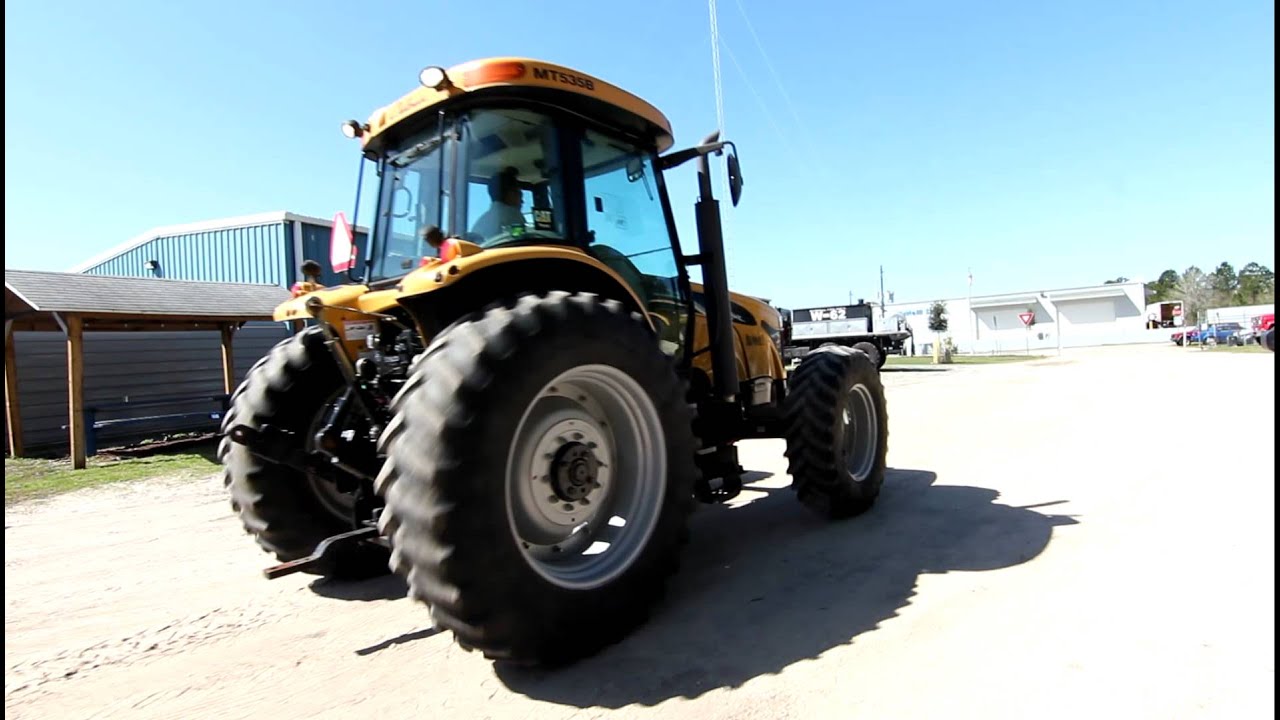
The Challenger MT525E is a powerful tractor built for tough farm work. It has a strong engine made by AGCO Power that runs on diesel fuel. This engine has 6 cylinders and can produce up to 142.0 horsepower. The tractor uses a special system called selective catalytic reduction (SCR) to keep its emissions low and meet Tier IV standards. One of the best things about the MT525E is its TechStar Continuously Variable Transmission (CVT). This means it can change speeds smoothly without shifting gears. The tractor can go forward in 16 different ways and backward as much as you need. It's also good at lifting heavy things, with a rear hitch that can handle up to 11,750 pounds. The hydraulic system is strong too, pumping 29.6 gallons of fluid per minute at high pressure. This helps run tools and equipment attached to the tractor.
ManufacturerChallengerPower142 hpEngine6-cylTransTechStar Continuously Variable Transmission (CVT)
Image not recorded
Quick specs
- Category
- Utility
- Engine Power Output
- 142hp
- Operating Weight
- 15,200 lb
- Transmission
- TechStar Continuously Variable Transmission (CVT)
At a glance
How the MT525E compares
vs. Utility medianDistribution
Engine Power (hp)
Across all Utility tractors
142 hp · 92nd
This model
9
Median 55 hp
177
This modelUtility tractorsMediann = 5,383
The MT525E ranks at the 92nd percentile for engine power among recorded utility tractors.
Overview
About the Challenger MT525E
The Challenger MT525E is a powerful tractor built for tough farm work. It has a strong engine made by AGCO Power that runs on diesel fuel. This engine has 6 cylinders and can produce up to 142.0 horsepower. The tractor uses a special system called selective catalytic reduction (SCR) to keep its emissions low and meet Tier IV standards. One of the best things about the MT525E is its TechStar Continuously Variable Transmission (CVT). This means it can change speeds smoothly without shifting gears. The tractor can go forward in 16 different ways and backward as much as you need. It's also good at lifting heavy things, with a rear hitch that can handle up to 11,750 pounds. The hydraulic system is strong too, pumping 29.6 gallons of fluid per minute at high pressure. This helps run tools and equipment attached to the tractor.
Full specifications
Every recorded spec
General
| Manufacturer | Challenger |
|---|---|
| Model | MT525E |
| Category | Utility tractor |
| Operating weight | 15,200lb |
Engine
| Make | AGCO Power |
|---|---|
| Model | Z001B |
| Power | 142hp |
| Cylinders | 6 |
| Displacement | 402ci |
| Bore | 4.25in |
| Stroke | 4.72in |
Transmission
| Type | TechStar Continuously Variable Transmission (CVT) |
|---|---|
| Forward gears | 16 |
Hydraulics
| Type | Closed-Center Load Sensing |
|---|---|
| Pump flow | 29.6gpm |
| Pressure | 2,870psi |
Dimensions
| Operating weight | 15,200lb |
|---|
Head to head
MT525E vs. Utility median
How the Challenger MT525E compares to other Utility tractors
| Spec | This model | Utility median | Difference | Percentile |
|---|---|---|---|---|
| Engine Power | 142 hp | 55 hp | +158% | 92nd |
| Engine Displacement | 402 ci | 183 ci | +120% | 90th |
| Cylinders | 6 | 4 | +50% | 93rd |
| Forward Gears | 16 | 12 | +33% | 73rd |
| Operating Weight | 15,200 lb | 5,303 lb | +187% | 93rd |
| 3-Point Hitch Capacity | 11,750 lb | 3,197 lb | +268% | 91st |
Medians and percentiles are computed from the utility tractors in our database with a recorded value for each spec (sample sizes 1,083–5,720 models).
Compare to tractors with similar specs
Commonly compared Challenger tractors
| Tractor | Engine Power | Operating Weight | Years | Compare |
|---|---|---|---|---|
| Challenger MT485E | 144 hp | 15,432 lb | — | Compare → |
| Challenger MT535D | 144.4 hp | 16,755 lb | — | Compare → |
| Challenger MT535B | 145.9 hp | 14,780 lb | — | Compare → |
| Challenger MT525D | 136.2 hp | 13,920 lb | — | Compare → |
| Challenger MT495D | 150 hp | 15,765 lb | — | Compare → |
Commonly compared tractors with similar horsepower from other brands
| Tractor | Engine Power | Operating Weight | Years | Compare |
|---|---|---|---|---|
| AGCO RT135 | 143.94 hp | 15,525 lb | — | Compare → |
| CaseIH 1455 XL | 145 hp | 11,499 lb | — | Compare → |
| Allis Chalmers 7045 | 136.65 hp | 14,500 lb | 1978–1981 | Compare → |
| Allis Chalmers 210 | 136 hp | 12,425 lb | 1970–1973 | Compare → |
| Allis Chalmers 8030 | 148 hp | 14,200 lb | 1982–1985 | Compare → |
Explore
Challenger siblings

Explore
Similar-spec models

FAQ
Common questions
How powerful is the Challenger MT525E?
The Challenger MT525E has an engine power output of 142 hp. It is powered by a 6-cylinder engine displacing 402 ci.
What hydraulics does the Challenger MT525E have?
The Challenger MT525E uses a Closed-Center Load Sensing hydraulic system with a pump flow of 29.6 gpm.
What three-point hitch category does the Challenger MT525E use?
The Challenger MT525E has a Category 2 three-point hitch rated to lift 11,750 lb.
What is the working weight of the Challenger MT525E?
The operating weight of the Challenger MT525E is approximately 15,200 lb.
What type of transmission does the Challenger MT525E have?
The Challenger MT525E uses a TechStar Continuously Variable Transmission (CVT) transmission offering 16 forward gears.
What routine service does the Challenger MT525E need?
Regular maintenance for the Challenger MT525E includes checking and changing engine oil, hydraulic fluid, and filters, plus routine inspections as recommended in the owner's manual. Always follow the manufacturer's maintenance schedule for specific intervals and procedures.