Row Crop tractorsSpec sheet
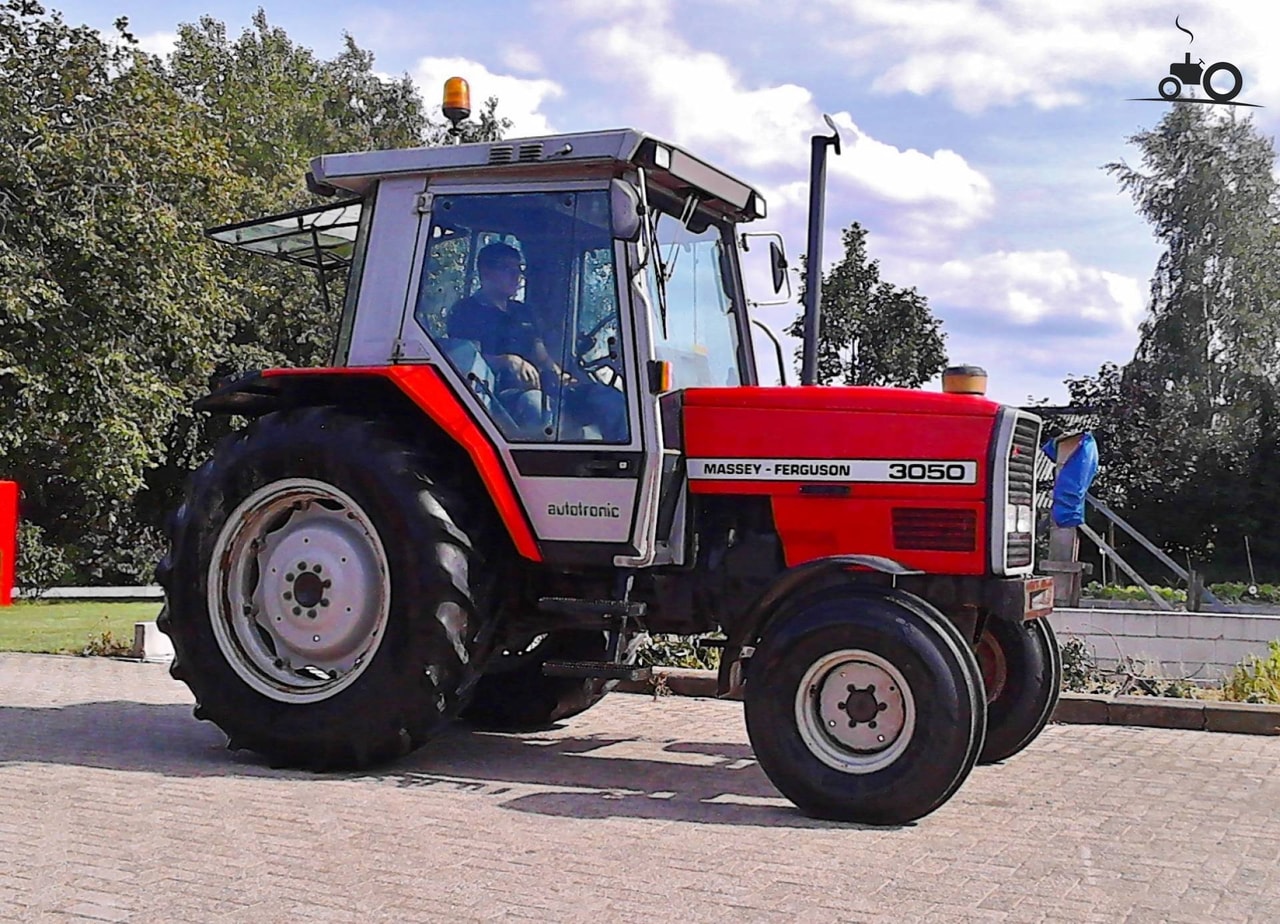
Massey Ferguson 3050
The Massey Ferguson 3050 is a row crop tractor built for farm work. It has a 2-wheel drive system and power steering, making it easy to handle in the fields. The tractor comes with a fully synchronized transmission that has 16 forward and 16 reverse gears, giving the driver lots of options for different tasks. Under the hood, the Massey Ferguson 3050 has a Perkins A4.236 diesel engine. This engine has 4 cylinders and is liquid-cooled to keep it running smoothly. It produces 63 horsepower, which is on the lower end compared to other tractors. The engine size is also smaller than average, but it runs at a higher speed than most. The tractor weighs 8,410 pounds, which is on the lighter side for its class. It has a 3-point hitch and two PTO speeds (540 and 1000 rpm) for attaching and powering different tools. The hydraulic system can handle average pressure levels, making it suitable for many farm jobs.
ManufacturerMassey FergusonPower63 hp(47.0 kW)Class60–100 HP tractors →Engine4-cylinderTransmissionFully synchronized
Key specifications
- Category
- Row Crop
- Engine power
- 63hp
- Operating weight
- 8,410 lb
- Transmission
- Fully synchronized
Category comparison
3050 compared with its category
vs. Row Crop medianDistribution
Engine Power (hp)
All recorded Row Crop tractors
63 hp · 9th
This model
12
Median 138 hp
283
This modelRow Crop tractorsMediann = 1,206
The 3050 ranks at the 9th percentile for engine power among recorded row crop tractors.
Overview
About the Massey Ferguson 3050
The Massey Ferguson 3050 is a row crop tractor built for farm work. It has a 2-wheel drive system and power steering, making it easy to handle in the fields. The tractor comes with a fully synchronized transmission that has 16 forward and 16 reverse gears, giving the driver lots of options for different tasks. Under the hood, the Massey Ferguson 3050 has a Perkins A4.236 diesel engine. This engine has 4 cylinders and is liquid-cooled to keep it running smoothly. It produces 63 horsepower, which is on the lower end compared to other tractors. The engine size is also smaller than average, but it runs at a higher speed than most. The tractor weighs 8,410 pounds, which is on the lighter side for its class. It has a 3-point hitch and two PTO speeds (540 and 1000 rpm) for attaching and powering different tools. The hydraulic system can handle average pressure levels, making it suitable for many farm jobs.
Full specifications
Recorded specifications
General
| Manufacturer | Massey Ferguson |
|---|---|
| Model | 3050 |
| Category | Row Crop tractor |
| Type | 4x2 2WD |
| Operating weight | 8,410lb(3,815 kg) |
Engine
| Make | Perkins |
|---|---|
| Model | A4.236 |
| Power | 63hp(46.98 kW) |
| Cylinders | 4 |
| Displacement | 236ci(3.87 L) |
| Bore | 3.88in(98.42 mm) |
| Stroke | 5in(127 mm) |
Transmission
| Type | Fully synchronized |
|---|---|
| Forward gears | 16 |
| Reverse gears | 16 |
Chassis & drive
| Chassis | 4x2 2WD |
|---|---|
| Drive | 2WD |
| Steering | Power |
| Cab | ROPS |
Hydraulics
| Type | Open center |
|---|---|
| Pump flow | 12gpm(45.42 L/min) |
| Pressure | 2,625psi(18,100 kPa) |
Power take-off
| PTO speed | 540rpm |
|---|
Dimensions
| Length | 157.3in(3,995 mm) |
|---|---|
| Width | 72.1in(1,831 mm) |
| Operating weight | 8,410lb(3,815 kg) |
Closest alternatives
3050 compared with the nearest models by horsepower
By engine horsepower, the nearest row crop models to the 3050 are the Massey Ferguson 2625 and the Farmall 656. The Massey Ferguson 2625 matches it on rated power and weighs 3,160 lb less, so it is lighter for its power, which favors PTO and transport work over heavy draft. The Farmall 656 matches it on rated power and weighs 1,180 lb less, carrying 115 lb per horsepower against 133 lb. Of the 3 models, the 3050 has the highest weight per horsepower at 133 lb per hp.
| Spec | Massey Ferguson 3050 | Massey Ferguson 2625 | Farmall 656 |
|---|---|---|---|
| Engine power | 63 hp47 kW | 63 hp47 kW | 63 hp47 kW |
| Operating weight | 8,410 lb3,815 kg | 5,250 lb2,381 kg | 7,230 lb3,279 kg |
| Weight per hp | 133 lb/hp81 kg/kW | 83 lb/hp51 kg/kW | 115 lb/hp70 kg/kW |
| Displacement | 236 ci3.87 L | 220 ci3.61 L | 263 ci4.31 L |
| Cylinders | 4 | 4 | 6 |
| Transmission | Fully synchronized | SynchroShuttle | Gear |
| Drive | 2WD | 2WD | 2WD |
| Years built | - | 1985-1986 | 1965-1973 |
Calculators
Calculators for the 3050
PTO power
About 52 to 57 PTO hp
Estimated from the 63 hp engine rating. The calculator also estimates drawbar power by surface.
Implement sizing
Implements a 63 hp tractor can run
Maximum size is about a 7.5 ft rotary cutter or a 6.5 ft tiller. The calculator also sizes discs, plows and balers.
Ballast
155 lb per PTO hp as listed
The calculator gives the target weight and front/rear split for each job.
Units
63 hp is 47.0 kW
The converter gives kW and metric PS values, as used on European spec sheets.
Parts and manuals
Parts and manuals for the Massey Ferguson 3050
Each link opens a retailer search keyed to the fields recorded for this model. Confirm fitment against the serial plate before ordering.
Filters
- Oil filter for the Perkins A4.236Amazon
Fits the Perkins A4.236 4-cylinder diesel engine listed for this model. Confirm the part number against the engine serial plate.
- Air filter for the Perkins A4.236Amazon
Fits the Perkins A4.236 4-cylinder diesel engine listed for this model. Confirm the part number against the engine serial plate.
- Fuel filter for the Perkins A4.236Amazon
Fits the Perkins A4.236 4-cylinder diesel engine listed for this model. Confirm the part number against the engine serial plate.
- Hydraulic filter for the Perkins A4.236Amazon
Fits the Perkins A4.236 4-cylinder diesel engine listed for this model. Confirm the part number against the engine serial plate.
Manuals
- Massey Ferguson 3050 service and repair manualseManualOnline
Digital manuals. Check the serial number range on the listing.
- Massey Ferguson 3050 operator's manualAmazon
Printed and reprint manuals. Check the serial number range on the listing.
- Massey Ferguson 3050 service manualAmazon
Shop and repair manuals for this model.
Links in this section go to retailers. A purchase through them earns this site a commission at no extra cost to the buyer. As an Amazon Associate, Heavy Equipment Specs earns from qualifying purchases. Affiliate disclosure
Category medians
3050 vs. Row Crop median
Massey Ferguson 3050 compared with other Row Crop tractors
| Spec | This model | Row Crop median | Difference | Percentile |
|---|---|---|---|---|
| Engine Power | 63 hp | 138 hp | -54% | 9th |
| Engine Displacement | 236 ci | 391 ci | -40% | 14th |
| Cylinders | 4 | 6 | -33% | 17th |
| Forward Gears | 16 | 16 | at median | 50th |
| Operating Weight | 8,410 lb | 12,307 lb | -32% | 23rd |
| Length | 157 in | 180 in | -12% | 22nd |
| Width | 72.1 in | 91.2 in | -21% | 8th |
Medians and percentiles are calculated from the row crop tractors in the database that have a recorded value for each specification (sample size 806–1,417 models).
Same manufacturer
Other Massey Ferguson models


Other manufacturers
Models with similar horsepower


Gallery
Massey Ferguson 3050 photos


FAQ
Frequently asked questions
How powerful is the Massey Ferguson 3050?
The Massey Ferguson 3050 has an engine power output of 63 hp. It is powered by a 4-cylinder engine displacing 236 ci.
What hitch category is the Massey Ferguson 3050?
The Massey Ferguson 3050 uses a Category II hitch.
What is the working weight of the Massey Ferguson 3050?
The operating weight of the Massey Ferguson 3050 is approximately 8,410 lb.
What type of transmission does the Massey Ferguson 3050 have?
The Massey Ferguson 3050 uses a Fully synchronized transmission offering 16 forward gears.
What type of hydraulic system does the Massey Ferguson 3050 use?
Hydraulics on the Massey Ferguson 3050 are Open center, delivering 12 gpm of pump flow.
What routine service does the Massey Ferguson 3050 need?
Regular maintenance for the Massey Ferguson 3050 includes checking and changing engine oil, hydraulic fluid, and filters, plus routine inspections as recommended in the owner's manual. Always follow the manufacturer's maintenance schedule for specific intervals and procedures.