 Brand sibling
Row CropPerformance profile
CaseIH Puma 200
The CaseIH Puma 200 is a powerful row crop tractor built for tough farm work. It has a strong 6-cylinder diesel engine made by FPT that produces 200 horsepower. This engine is turbocharged and liquid-cooled, with 24 valves for smooth operation. The Puma 200 has above average engine power and displacement compared to other tractors. This tractor is a 4-wheel drive model with hydrostatic power steering for easy control. It has a full power shift transmission with 18 forward gears and 6 reverse gears, giving the driver lots of options. The Puma 200 is quite heavy, weighing 18,940 pounds, which is very high compared to many other tractors. It has a closed center hydraulic system and a rear hitch for attaching implements. The tractor meets Interim Tier 4 emissions standards using a special system called selective catalytic reduction.
ManufacturerCaseIHPower200 hpEngine6-cylTransFull power shift
Image not recorded
Quick specs
- Category
- Row Crop
- Engine Power Output
- 200hp
- Operating Weight
- 18,940 lb
- Transmission
- Full power shift
At a glance
How the Puma 200 compares
vs. Row Crop medianDistribution
Engine Power (hp)
Across all Row Crop tractors
200 hp · 77th
This model
12
Median 138 hp
283
This modelRow Crop tractorsMediann = 1,206
The Puma 200 ranks at the 77th percentile for engine power among recorded row crop tractors.
Overview
About the CaseIH Puma 200
The CaseIH Puma 200 is a powerful row crop tractor built for tough farm work. It has a strong 6-cylinder diesel engine made by FPT that produces 200 horsepower. This engine is turbocharged and liquid-cooled, with 24 valves for smooth operation. The Puma 200 has above average engine power and displacement compared to other tractors. This tractor is a 4-wheel drive model with hydrostatic power steering for easy control. It has a full power shift transmission with 18 forward gears and 6 reverse gears, giving the driver lots of options. The Puma 200 is quite heavy, weighing 18,940 pounds, which is very high compared to many other tractors. It has a closed center hydraulic system and a rear hitch for attaching implements. The tractor meets Interim Tier 4 emissions standards using a special system called selective catalytic reduction.
Full specifications
Every recorded spec
General
| Manufacturer | CaseIH |
|---|---|
| Model | Puma 200 |
| Category | Row Crop tractor |
| Type | 4x4 MFWD 4WD |
| Operating weight | 18,940lb |
Engine
| Make | FPT |
|---|---|
| Power | 200hp |
| Cylinders | 6 |
| Displacement | 410.6ci |
| Bore | 4.09in |
| Stroke | 5.2in |
Transmission
| Type | Full power shift |
|---|---|
| Forward gears | 18 |
| Reverse gears | 6 |
Chassis & drive
| Chassis | 4x4 MFWD 4WD |
|---|---|
| Drive | 4WD |
| Steering | Hydrostatic power |
Hydraulics
| Type | Closed center pressure flow compensating (PFC) |
|---|
Dimensions
| Width | 60in |
|---|---|
| Operating weight | 18,940lb |
Head to head
Puma 200 vs. Row Crop median
How the CaseIH Puma 200 compares to other Row Crop tractors
| Spec | This model | Row Crop median | Difference | Percentile |
|---|---|---|---|---|
| Engine Power | 200 hp | 138 hp | +45% | 77th |
| Engine Displacement | 411 ci | 391 ci | +5% | 60th |
| Cylinders | 6 | 6 | at median | 50th |
| Forward Gears | 18 | 16 | +13% | 61st |
| Operating Weight | 18,940 lb | 12,307 lb | +54% | 81st |
| Width | 60 in | 91.2 in | -34% | 2nd |
Medians and percentiles are computed from the row crop tractors in our database with a recorded value for each spec (sample sizes 806–1,417 models).
Compare to tractors with similar specs
Commonly compared CaseIH tractors
| Tractor | Engine Power | Operating Weight | Years | Compare |
|---|---|---|---|---|
| CaseIH Magnum 200 | 200 hp | 20,705 lb | — | Compare → |
| CaseIH MX210 Magnum | 200 hp | — | — | Compare → |
| CaseIH 3594 | 202 hp | 17,590 lb | 1985–1988 | Compare → |
| CaseIH 2394 | 197 hp | 16,240 lb | 1984–1988 | Compare → |
| CaseIH 3294 | 197 hp | 18,000 lb | — | Compare → |
Commonly compared tractors with similar horsepower from other brands
| Tractor | Engine Power | Operating Weight | Years | Compare |
|---|---|---|---|---|
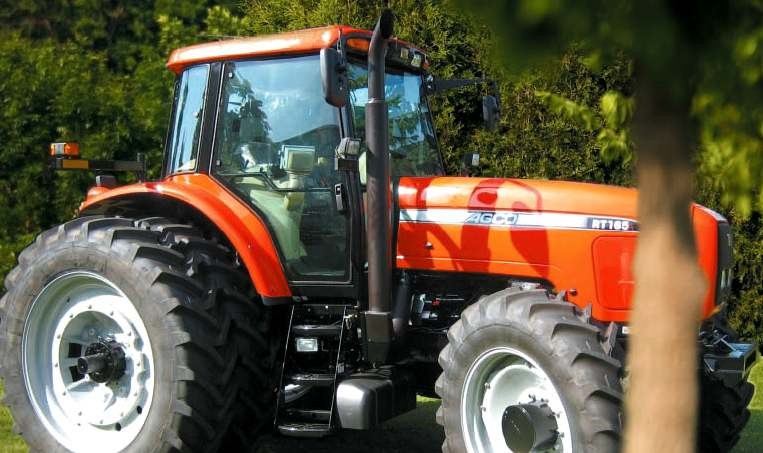
| AGCO RT165A | 200 hp | 17,460 lb | — | Compare → |
| Allis Chalmers 7060 | 192 hp | 13,990 lb | 1974–1981 | Compare → |
| Allis Chalmers 7080 | 210 hp | 13,638 lb | 1975–1981 | Compare → |
| Challenger 35 | 210 hp | 22,262 lb | — | Compare → |
| Allis Chalmers 7580 | 186.35 hp | 25,000 lb | 1977–1981 | Compare → |
Explore
CaseIH siblings


Explore
Similar-spec models

FAQ
Common questions
What is the engine power output of the CaseIH Puma 200?
Rated engine output for the CaseIH Puma 200 is 200 hp, delivered by a 6-cylinder engine. The engine displaces 410.6 ci.
Which transmission does the CaseIH Puma 200 use?
The CaseIH Puma 200 is equipped with a Full power shift transmission with 18 forward gears.
What hydraulics does the CaseIH Puma 200 have?
The CaseIH Puma 200 uses a Closed center pressure flow compensating (PFC) hydraulic system.
What is the operating weight of the CaseIH Puma 200?
In working trim, the CaseIH Puma 200 comes in at roughly 18,940 lb.
How do I maintain a CaseIH Puma 200?
Routine service for the CaseIH Puma 200 covers engine oil and filter changes, hydraulic and coolant level checks, air filter cleaning, and scheduled inspections. Refer to the manufacturer's maintenance schedule for exact intervals.